

You hear the other parents at the park talking about it. You see the registration deadlines popping up in your social media feed. Suddenly, a question that seemed years away is right in front of you: Is it time to start thinking about preschool?
Figuring out the right preschool age is often a parent’s first major, anxiety-inducing educational decision.
As a team of early childhood experts, we want to let you in on a secret: the ‘right’ age to start preschool isn’t a magic number on a calendar. While there are typical age ranges, a child’s readiness is a much deeper and more personal puzzle. It’s about their unique developmental stage, their social curiosity, and their emotional stamina.
This guide is designed to be your calm, clear roadmap. We will walk you through the typical ages for preschool programs, but more importantly, we will give you a simple checklist of readiness signs to look for in your own child.
Our goal is to replace your worry with confidence, helping you understand how old a child should be for preschool and feel great about whatever decision you make.
A Parent’s Guide to Preschool Age Ranges
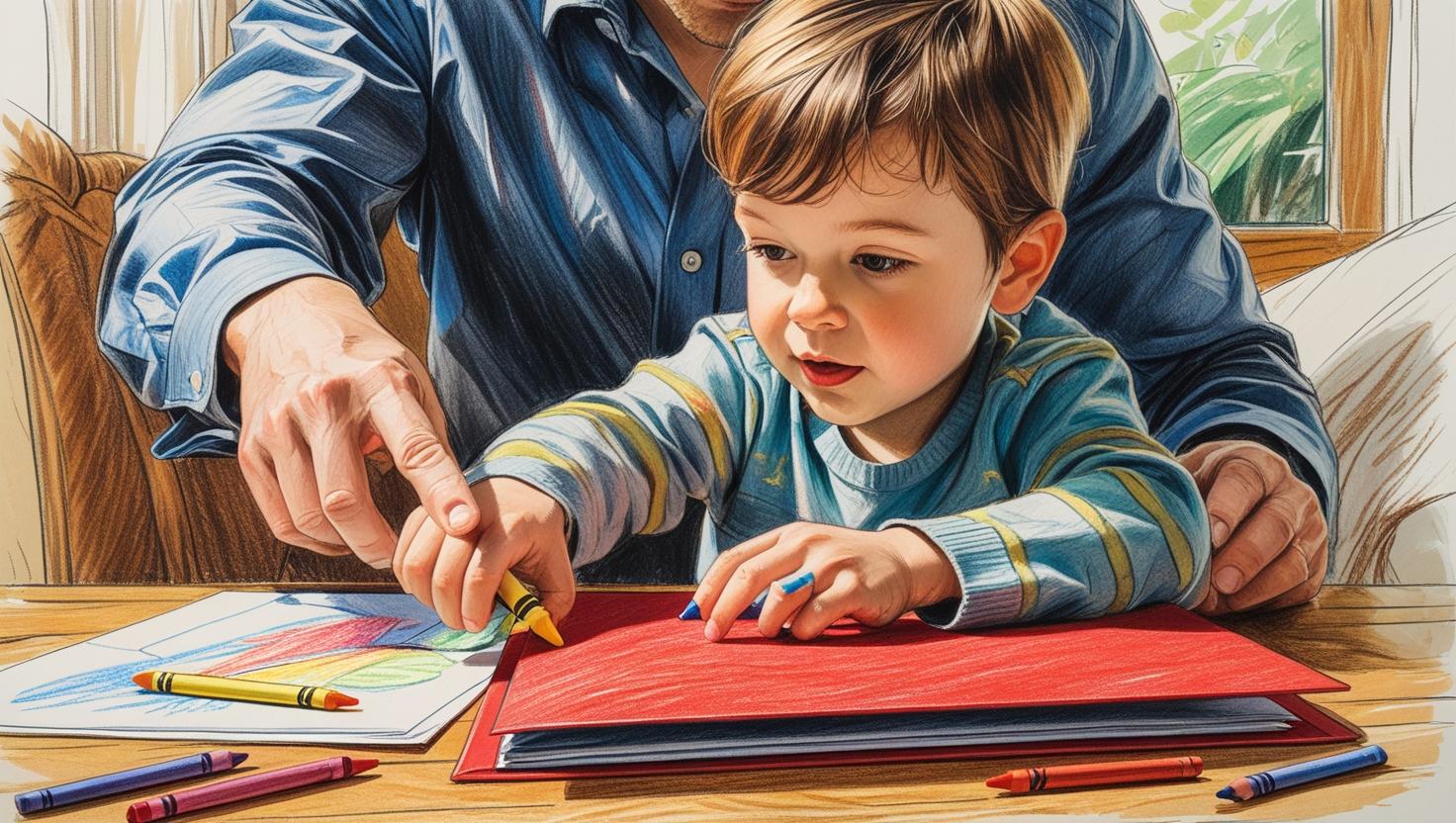
While readiness is more important than age, it’s helpful to understand the typical structure of early childhood programs in the U.S. This can help you understand what options are available and what the focus of each year generally is. Here is a simple breakdown of the common preschool age range.
The “Twos” Program (Age 2 to 3)
Many programs offer a class for older two-year-olds, often starting around 2.5. This is typically a child’s very first experience in a school-like setting.
- Primary Focus: Socialization and separation. The main goals are for children to become comfortable being away from their parents for a short time and to learn to navigate a space with other children.
- What It Looks Like: Very short days (maybe 2-3 hours, a few times a week), with a heavy emphasis on unstructured play, sensory exploration, music, and stories.
The “Threes” Program / Traditional Preschool (Age 3 to 4)
This is what most people think of as traditional preschool. The focus shifts from simple separation to more interactive social learning.
- Primary Focus: Learning to be part of a group. Children learn through play about taking turns, sharing materials, and following a simple classroom routine.
- What It Looks Like: The day might be slightly longer. While still play-based, activities become more collaborative, and teachers begin to introduce foundational concepts like colors, shapes, and letter exposure in a very low-pressure way.
The “Fours” Program / Pre-Kindergarten (Pre-K) (Age 4 to 5)
This is the year directly before kindergarten, and the curriculum reflects that. It’s the bridge to more formal schooling.
- Primary Focus: Kindergarten readiness. There is a more intentional focus on pre-academic skills.
- What It Looks Like: More structured learning activities are introduced, such as “circle time” for letter sounds and counting. The goal is for children to leave Pre-K recognizing most letters, able to write their name, and with the social skills to thrive in a larger kindergarten class. To learn more about the curriculum, you can explore our guide on what a high-quality preschool program looks like.
Beyond the Calendar: 5 Key Signs of Preschool Readiness
While the age ranges provide a helpful guide, the most important question is not “How old is my child?” but “Is my child ready?”.
As experts, we encourage parents to look for signs of developmental readiness rather than focusing on a specific birthday. A younger 3-year-old might be more ready than an older one, depending on their unique skills. These five key areas will give you a much clearer picture.
1. Emotional Readiness: Can They Handle Separation?
This is often the biggest hurdle. Has your child had successful, short separations from you (e.g., being with a grandparent or a babysitter)? A child who is ready for preschool doesn’t need to be completely free of separation anxiety, but they should have the basic coping skills to manage their feelings with a teacher’s support after you’ve said a confident goodbye.
2. Social Readiness: Do They Show Interest in Other Kids?
At this age, we don’t expect complex cooperative play. The key sign of social readiness is curiosity. Does your child show interest in watching other children? Have they moved from purely solitary play to ‘parallel play’ (playing alongside other kids)? This interest in peers is the foundation for all future friendship skills.
3. Communication Readiness: Can They Express Basic Needs?
A preschooler doesn’t need a huge vocabulary, but they must be able to communicate their fundamental needs to a teacher. Can they say things like “I need help,” “I’m hungry,” or “Potty”? Being understood is crucial for their safety and confidence in a classroom setting.
4. Independence Readiness: Are They Mostly Self-Sufficient?
Preschool is all about fostering independence. A child who has a head start in this area will adapt more easily. The most important skill here is being mostly independent with potty training. Other great signs include being able to feed themselves and manage simple clothing like pulling up their pants or putting on their coat.
5. Physical & Mental Stamina: Can They Handle a Structured Day?
A preschool day, even a short one, is busy and stimulating. A key sign of readiness is that your child has likely given up their morning nap and can handle a few hours of structured activity without becoming completely overwhelmed or exhausted.
They should also be able to focus on a single, preferred activity (like a puzzle or a book) for at least 5-10 minutes. These are all part of the 5 developmental domains of early childhood, which provide a complete picture of a child’s growth.
Is It Okay to Wait? Great Reasons to Consider Another Year
In a culture that often pushes for “earlier is better,” it can feel like a failure to consider waiting an extra year to start preschool. As experts, we want to be very clear: it is absolutely okay to wait.
In fact, for some children, an extra year of development at home or in a less structured environment can be an incredible gift. ‘Redshirting’—the practice of delaying school entry—is a valid and often wise choice. Here are some great reasons why waiting might be the best decision for your child.
1. They Have a Late Birthday
If your child’s birthday falls close to the school’s cutoff date, they would be among the very youngest in their class. While many children handle this just fine, an extra year can give a younger child a huge boost in social and emotional maturity, allowing them to enter school feeling like a confident leader rather than just trying to keep up.
2. They Still Struggle Significantly with Separation
If your child still experiences intense, prolonged distress when you leave, even with familiar caregivers, forcing them into a new, busy environment can be counterproductive.
An extra year to build their sense of security and attachment with you is not a delay; it’s a valuable investment in their long-term emotional well-being.
3. They Are Thriving in Their Current Environment
If your child is happy, engaged, and learning in their current setting—whether it’s at home with you, with a grandparent, or in a smaller daycare—there is no urgent need to switch. Stability and strong relationships are the most important ingredients for early learning. You can easily enrich their learning at home with simple, play-based approaches like doing fun and educational outdoor activities together.
4. Your Gut Tells You They’re Not Ready
This is the most important reason of all. You are the world’s foremost expert on your child. If your intuition is telling you that they would benefit from another year of quiet, connected time at home, you should trust that feeling. No academic benchmark is more important than a child’s sense of safety and a parent’s peace of mind.
About Preschool Age – F.A.Q.
Navigating the terminology and timelines of early education can be confusing. Here are our expert answers to the most common questions parents have about preschool age.
What is the official age range for a 'preschooler'?
A 'preschooler' is a child who is past the toddler stage but has not yet entered kindergarten. This typically refers to a child between the ages of 3 and 4 years old. Sometimes, children as young as 2.5 are included in this group, especially if they are in a mixed-age preschool program.
What is the difference between a 'toddler' and a 'preschooler'?
The 'toddler' stage is generally considered to be from age 1 to 3. The 'preschooler' stage follows, from age 3 to 5. The key developmental difference is a shift from parallel play (playing alongside others) to more interactive, imaginative play, and a massive explosion in language and communication skills.
So, are 4-year-olds in preschool?
Yes. The 4-year-old year is often called 'Pre-Kindergarten' or 'Pre-K', but it falls under the general umbrella of preschool education. It is typically the final, and most academically-focused, year of preschool before a child transitions to kindergarten.
What's the best age to actually start preschool?
There is no single 'best' age. While many programs start accepting children around age 3, the right time depends entirely on your child's individual readiness (social, emotional, and independence skills) and your family's needs. Some children thrive starting at 2.5, while others benefit from waiting until they are 4.
How many hours or days a week should a 3-year-old go to preschool?
For a 3-year-old's first school experience, a part-time schedule is often a great way to start. Many programs offer options like 2 or 3 half-days per week (e.g., 9 am to 12 pm). This provides the benefits of socialization and routine without being overwhelming for a child who may still need a long afternoon nap.
How is preschool age different in the UK vs. the US?
This is a common point of confusion. In the US, 'preschool' is for ages 3-4. In the UK, a 'nursery' often serves a similar purpose for the same age group. The term 'preschool' in the UK often refers more specifically to the year before 'Reception' (the UK equivalent of Kindergarten). Additionally, funding models can be very different.
Conclusion: Trust Your Gut: You Are the Expert on Your Child
After all the research, the checklists, and the expert advice, the decision of when to start preschool comes down to one thing: your deep, intuitive knowledge of your own child. The ‘right’ preschool age is not a date on a calendar; it is the moment when you feel your child is ready to thrive in a new environment. There is no right or wrong answer, and there is no universal timeline.
Whether you decide to enroll them at age 3, wait until they are 4, or choose to continue their early learning journey at home, the most important ingredient for success is a loving, supportive, and play-based environment. Trust your gut—you are your child’s first and most important teacher.
For parents who want to enrich their child’s learning, whether they are at home or in a program, our team has designed the ultimate resource. Our complete bundle of preschool activities is packed with hundreds of fun, engaging worksheets that cover all the foundational skills they’ll need for this exciting new chapter.