
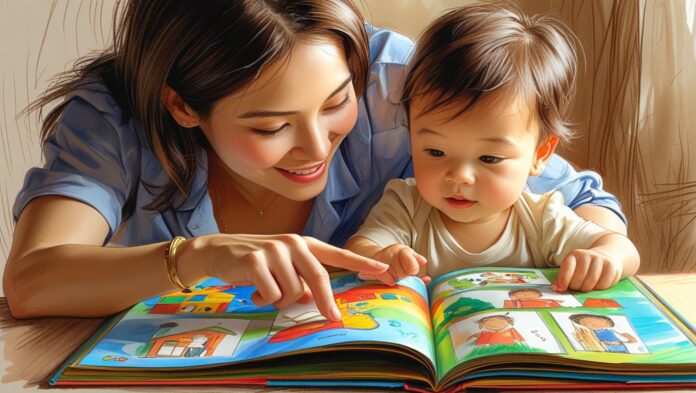
The word ‘preschool’ can bring up a whirlwind of questions and a surprising amount of stress. Is it just daycare with more structure? At what age should you start? And how do you choose the right one? As a team of early childhood experts, we know that for parents of children in the 2 to 4-year-old range, this first big step into the world of education can feel overwhelming.
The truth is, a quality preschool is more than just a place for your child to play. It is a purposeful environment designed to nurture their growth during one of the most explosive periods of brain development. It’s a critical part of the the crucial stages of early childhood development, laying the foundation for social, emotional, and academic success for years to come.
This guide is your calm, clear roadmap to understanding what preschool is. We will answer your biggest questions: the difference between programs for 3 and 4-year-olds, what your child will actually learn, and how to choose the right fit.
Our goal is to transform your anxiety into confidence, empowering you to make the best choice for your family.
Preschool vs. Pre-K: Decoding the Difference
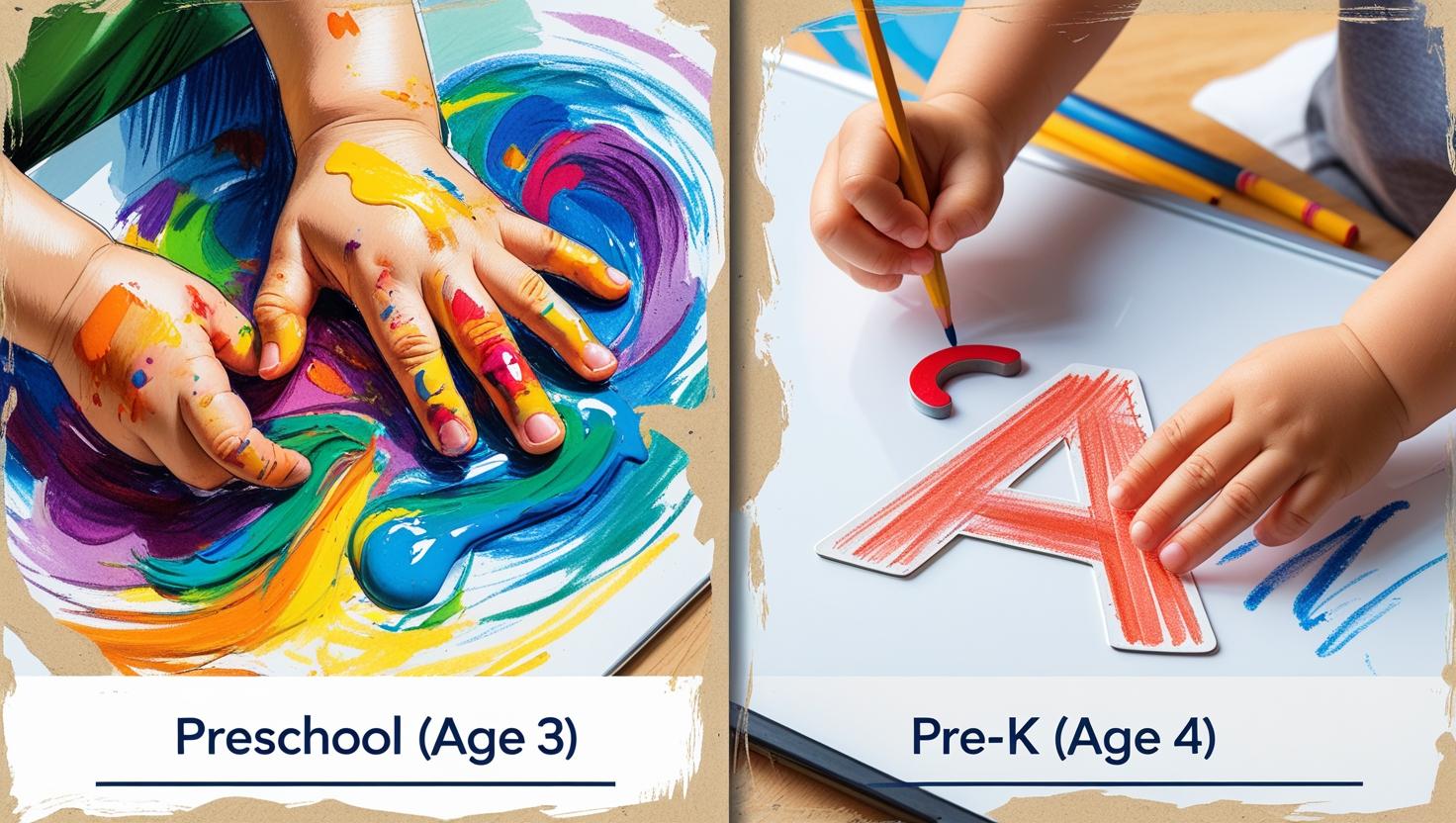
One of the first and most confusing hurdles for parents is figuring out the terminology. You’ll hear ‘preschool’, ‘pre-k’, and ‘daycare’ used interchangeably, but are they the same? Not exactly. As experts, let’s clear up the confusion around what is preschool vs pre k.
Preschool (Typically for Ages 2.5 – 4)
Think of preschool as a child’s first introduction to a structured learning environment. The primary focus is not on academics, but on social and emotional development through play.
- Core Goal: To teach children how to be part of a group. This includes crucial skills like sharing, taking turns, resolving simple conflicts, and following a group routine.
- Learning Style: Almost entirely play-based. The ‘learning’ happens organically as children explore different ‘centers’ like a block area, a dramatic play kitchen, or an art easel.
Pre-K (Pre-Kindergarten, Typically for Ages 4 – 5)
Pre-K is the year before kindergarten. While it’s still play-based, there is a more intentional focus on preparing children for the academic expectations of kindergarten.
- Core Goal: To ensure kindergarten readiness. The curriculum will introduce more structured pre-academic skills.
- Learning Style: A blend of play and more structured activities. You’ll see more emphasis on letter recognition, sounds, counting, and simple math concepts, often during a dedicated ‘circle time’.
The bottom line: Think of it as a sequence. Preschool teaches a child how to ‘do’ school (social skills, routine). Pre-K then builds on that foundation by introducing the academic skills needed for the next big step. Many preschools offer a combined program, with a “threes” class and a more structured “fours” (Pre-K) class.
A Peek Inside the Preschool Curriculum
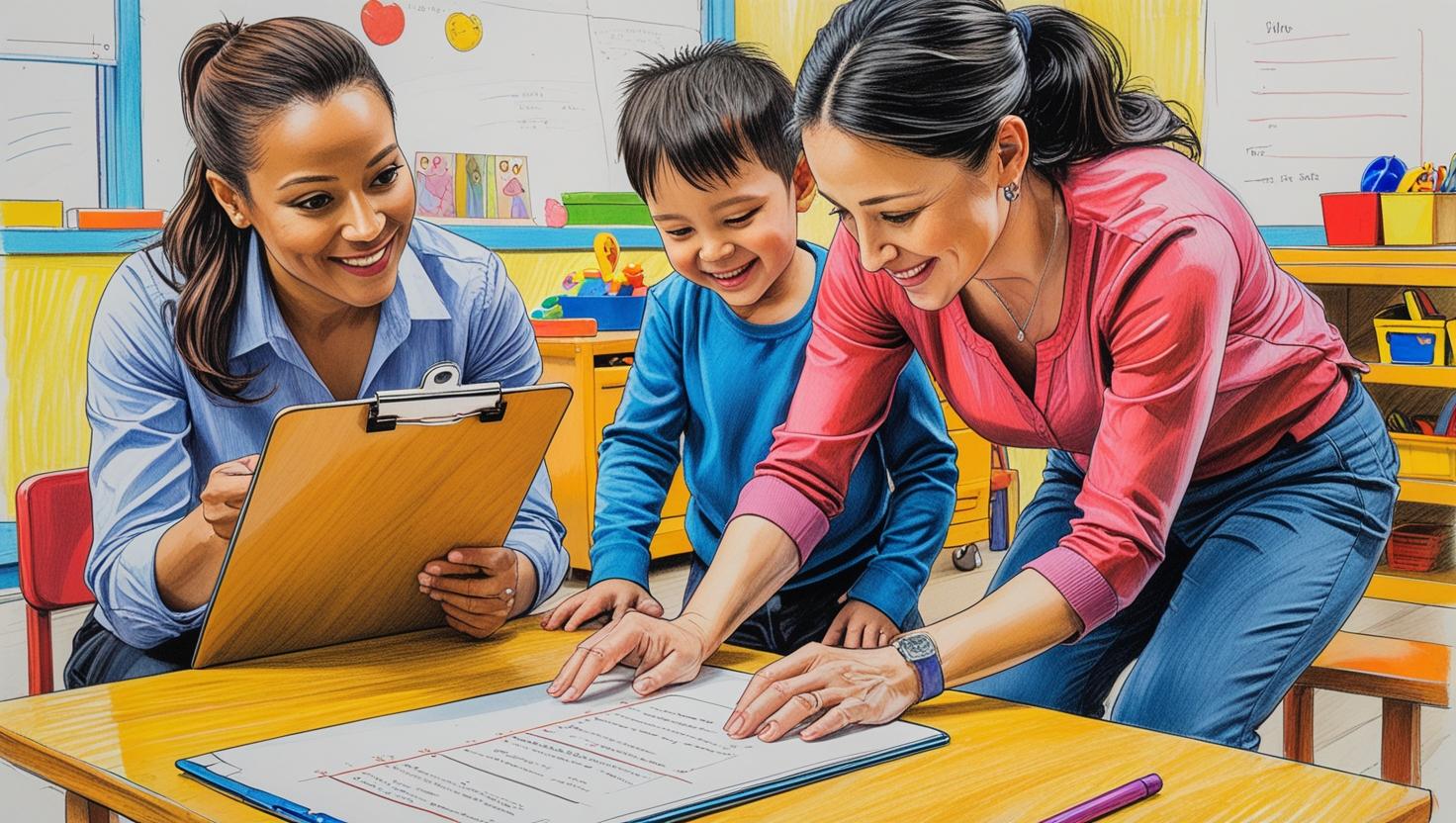
The word ‘curriculum’ often brings to mind textbooks, desks, and formal lessons. In a preschool setting, however, the preschool curriculum looks very different. It is a framework for learning that is built almost entirely around one central concept: purposeful play.
As experts, we know that children aged 3-5 learn best not by being told, but by doing, exploring, and discovering. A good preschool curriculum intentionally designs the classroom and daily rhythm to foster growth in three key areas.
1. Social & Emotional Skills (The Primary Job of Preschool)
This is the heart of the preschool experience. Before any academic learning can happen, a child needs to learn how to function in a group. The curriculum is designed to teach:
- Sharing and Taking Turns: Learned during ‘center time’ when multiple children want the same popular toy.
- Simple Conflict Resolution: Teachers guide them to use their words, saying things like, “Can I have a turn when you are finished?”
- Following a Group Routine: The predictable flow of the day, from circle time to snack time to clean-up, teaches self-regulation and security.
2. Pre-Academic Foundations (Learning Through Play)
The academic learning in preschool is about exposure, not mastery. The goal is to build familiarity and a positive association with concepts. This often happens during what is preschool circle time, a short, teacher-led group session, and includes:
- Literacy Exposure: Singing the ABC song, reading stories aloud, and learning to recognize the first letter of their own name.
- Early Math Concepts: Counting friends in the room, sorting blocks by color, making patterns with beads, and identifying basic shapes.
All of these skills are designed to work together, building a strong, low-pressure foundation for the more academic world of elementary school and, most immediately, getting ready for kindergarten.
3. Life Skills & Independence (Building Confidence)
A huge part of the curriculum that parents often overlook is the focus on practical life skills. These are major confidence boosters.
- Self-Care: Managing their own jacket and shoes, opening their own lunchbox, and being independent in the bathroom.
- Responsibility: Learning to clean up their own toys and materials after an activity is a core part of the daily routine.
How to Choose the Right Preschool: Your Tour Checklist
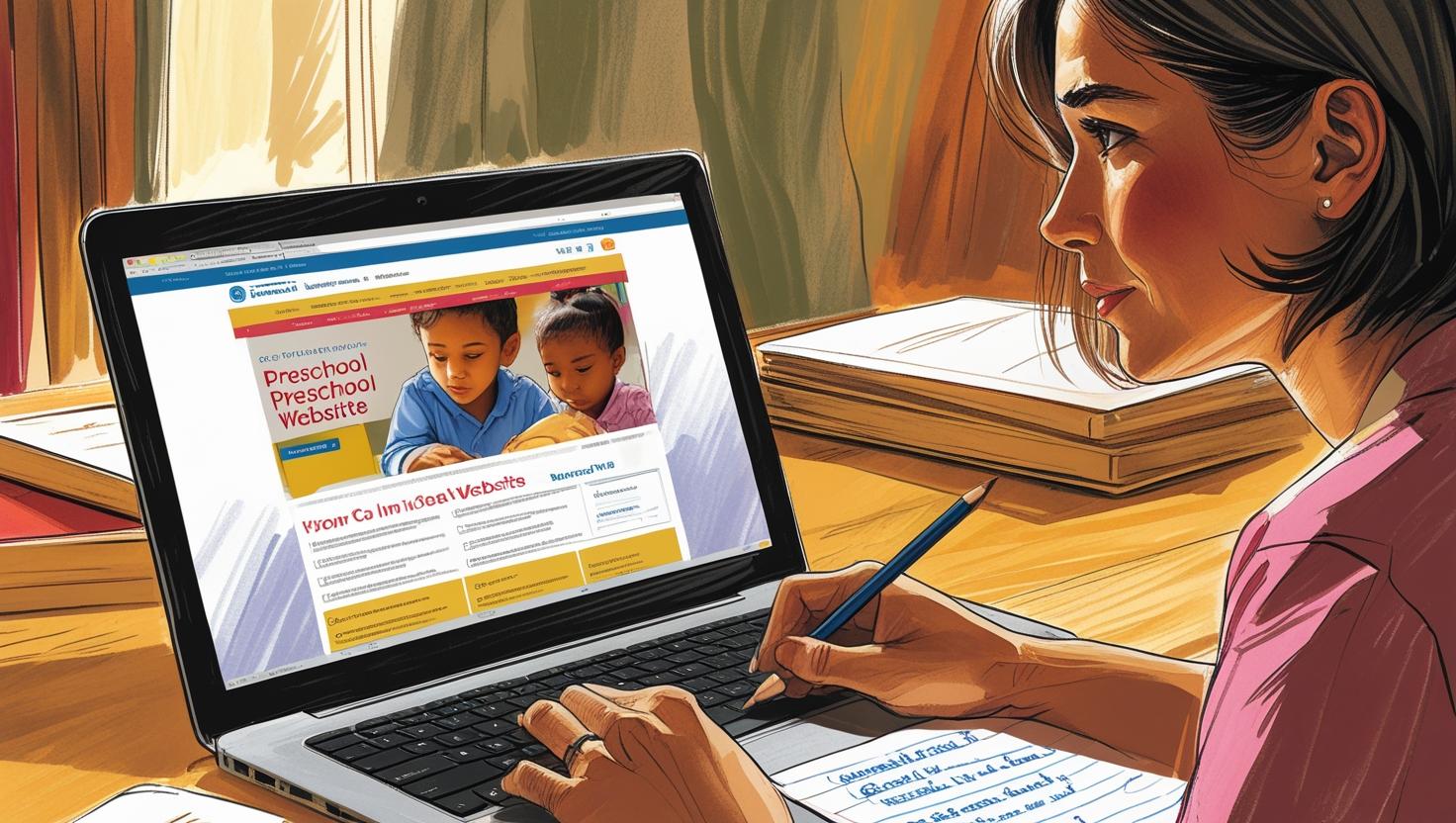
Choosing a preschool can feel like a high-stakes decision. The best way to move past the glossy brochures and find the right fit for your family is to tour your top choices in person.
As experts, we recommend you go armed with a plan. This isn’t just about the ‘vibe’; it’s about looking for specific indicators of a high-quality program. Use this checklist on your next tour.
What to OBSERVE with Your Eyes
Look beyond the new toys. The environment tells you everything about a school’s philosophy.
- The Teachers’ Posture: Are the teachers standing over the children, or are they down on the floor, at eye level, engaged in their play? Look for teachers who are on the children’s level.
- The Children’s Faces: Do the children seem generally happy, busy, and engaged? Or do they look bored, stressed, or chaotic?
- The Artwork on the Walls: Is it all identical, perfect-looking crafts (product-focused)? Or is it messy, unique, and creative, showing the children’s individual process (process-focused)? Look for process-focused art.
- The Layout of the Room: Does it look like a miniature classroom with rows of desks, or is it organized into inviting play ‘centers’ (a block area, a reading nook, a science table)?
What to ASK the Director
You have limited time, so make your questions count. Here are the most important ones:
- “What is your school’s educational philosophy?”
Listen for keywords like ‘play-based’, ‘Montessori’, ‘Reggio Emilia’, or ‘academic’. This will tell you their core approach to learning. - “How do you handle discipline and challenging behaviors?”
Look for answers that focus on positive guidance, teaching self-regulation (like a ‘calm-down corner’), and partnership with parents, rather than punitive measures like time-outs. - “What is your teacher turnover rate?”
A low turnover rate is one of the best signs of a happy, well-supported staff and a positive school culture. High turnover can be a red flag. - “How do you communicate with parents?”
Is there a daily report? A weekly email? An app with photos? Look for a school that values open and frequent communication.
A Fun First Step: Preparing Your Child Emotionally
Once you’ve chosen a program, the next step is to prepare your child for this exciting new chapter. This preparation should be positive, playful, and focused on building excitement, not anxiety. One of the best ways to start the conversation about school is to focus on them and their unique identity.
Talking about what makes them special, what they like to do, and who their friends are helps build the self-confidence they’ll need to walk into a new classroom. It gives them a strong sense of self before they enter a group setting.
A wonderful and concrete way to begin this conversation is to sit down together and document all the things that make them who they are. To make this easy, you can use our fun ‘All About Me’ worksheet. It’s designed to be a joyful activity that opens up dialogue about their favorite things and gets them excited about sharing those things with new friends and teachers. It’s the perfect, low-pressure first step in the journey toward school readiness.
10 F.A.Q. about Preschool
The terminology around early childhood education can be confusing. Here are our expert answers to the most common questions we hear from parents.
What is the simple definition of a preschool?
A preschool is an early childhood program designed to introduce children, typically ages 3 to 4, to a structured learning environment. Its primary focus is on developing social-emotional skills, language, and motor abilities through purposeful, play-based activities, rather than formal academics.
What defines a 'preschooler'?
A 'preschooler' is a child who is past the toddler stage but has not yet entered kindergarten. This typically refers to a child between the ages of 3 and 4 years old. It is an age defined by explosive growth in language, social skills, and a desire for independence.
What is the difference between a nursery and a preschool in the US?
In the United States, the terms are often used interchangeably, but generally, a 'nursery school' or 'daycare' may cater to a wider age range (including infants and toddlers) with a primary focus on care. A 'preschool' program typically has a more structured educational component specifically for the 3-4 year old age group.
What is the difference between toddler school and preschool?
A 'toddler school' or program is specifically for toddlers (roughly 18 months to 3 years old). Its focus is on basic socialization, sensory exploration, and language exposure. A 'preschool' is the next step up, for ages 3-4, and introduces more complex group activities, problem-solving, and pre-academic concepts.
What is the best age to start preschool?
There is no single 'best' age, as it depends entirely on the child's individual readiness and the family's needs. Many programs begin accepting children at age 2.5 or 3. A good indicator that a child is ready is when they show interest in playing with other children, can handle separation from a parent for short periods, and have some basic communication skills.
Are 4-year-olds in preschool?
Yes. The 4-year-old year is often called 'Pre-Kindergarten' or 'Pre-K', but it falls under the general umbrella of preschool education. This is the year where the focus shifts slightly to include more kindergarten readiness skills, such as letter recognition and basic math concepts.
What comes after a preschooler?
After a child is a preschooler (age 3-4), they become a 'kindergartener' (age 5-6). Kindergarten is the next formal step in the US education system.
What is the difference between preschool in the US and the UK?
This is a common point of confusion. In the US, 'preschool' is for ages 3-4. In the UK, a 'nursery' often serves a similar purpose for ages 3-4. The term 'preschool' in the UK often refers more specifically to the year before 'Reception' (the UK equivalent of Kindergarten). Additionally, funding models are different; while preschool in the US is typically paid for privately, many programs in the UK are government-funded.
Trust Your Gut to Find the Right Fit
After all the research, the tours, and the checklists, the final step in choosing a preschool is the most personal. You can compare curriculums and teacher qualifications, but the most important factor is finding a place that feels right for your child and your family. Is it a place where you can imagine your child feeling happy, safe, and celebrated? That is the right choice.
Understanding what preschool is all about—a time for joyful, play-based learning and social growth—empowers you to move forward with confidence. You are not just enrolling them in a school; you are opening the door to a wonderful new chapter of discovery and friendship.
For parents who want to support this exciting journey with fun, hands-on activities at home, our team has designed the ultimate resource. Our complete bundle of preschool worksheets is packed with hundreds of playful pages that reinforce the very skills they’ll be learning in their new classroom, from letters and numbers to shapes and cutting practice.