
If the phrase “Let’s go to the playground!” is starting to feel a little repetitive, you’re in the right place.
The familiar slide and swings are fantastic for burning off energy, but after a while, you might start to wonder: are there other ways to make our time outside more engaging and educational? As a team of early childhood experts, we’re here to tell you that the answer is a resounding “Yes!”.
Your backyard, a local park, or even a simple patch of grass can be the most powerful and inspiring classroom your child will ever experience. The great outdoors is a natural laboratory, art studio, and gymnasium all rolled into one.
The key is to have a few simple ideas in your back pocket to transform an ordinary afternoon into an extraordinary adventure in learning.
This guide is your new playbook. We’ve compiled 20 fun and easy educational outdoor activities for preschoolers that go far beyond the playground. These are low-cost, high-impact ideas designed to spark curiosity, build critical skills, and create lasting memories—all while enjoying the fresh air.
Why Outdoor Learning is a Superpower for Your Preschooler
Moving learning outside isn’t just a change of scenery; it’s a powerful strategy for boosting your child’s development in every single area. Research consistently shows that children who spend more time in unstructured outdoor play are more resilient, creative, and focused. As experts, we see three major superpowers at work when kids learn in nature.
1. It Builds a Stronger, More Coordinated Body
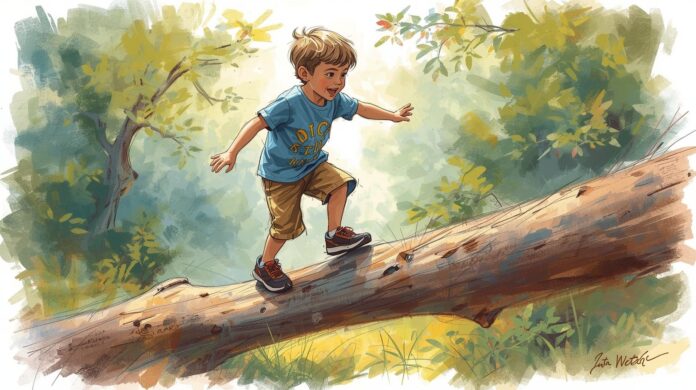
Uneven ground, hills to climb, and trees to navigate are nature’s obstacle course. Unlike a flat, predictable playground, the natural world challenges a child’s balance, coordination, and strength in dynamic ways. Every time they walk on a log, jump over a root, or pick up a heavy rock, they are developing their physical abilities. This is a fundamental part of mastering both large and small movements, as you can explore in our complete guide to motor skills.
2. It Fosters a ‘Scientist’s Mindset’
The outdoors is a sensory-rich environment that sparks natural curiosity. Why are the leaves crunchy? Where do the ants go at night? How did that seed become a flower? Nature encourages children to observe, ask questions, and form their own conclusions. This process of discovery is the very foundation of scientific thinking and problem-solving.
3. It Boosts Emotional Well-being
Studies have shown that time in nature can reduce stress and improve focus, even in young children. The open space allows for a sense of freedom and autonomy that is hard to replicate indoors. It’s a natural mood booster and provides a calming environment where children can learn to take healthy risks, building their confidence and resilience.
Become Nature Detectives: Activities for Observation & Discovery
These outdoor activities for preschoolers are all about encouraging your child to look closer, listen carefully, and become a true detective of the natural world. They transform a simple walk into an exciting mission.
1. The Ultimate Nature Scavenger Hunt

Description: A classic game with a sensory twist. Instead of just looking for items, children use all their senses to find objects with different attributes.
Materials Needed: A small bag or bucket for each child.
How to Do It: Give your child a mission to find a list of items based on their properties. For example: “Let’s find… something bumpy (a pinecone), something smooth (a river rock), something yellow (a dandelion), something that smells sweet (a flower), and something longer than your finger (a twig).”
Learning Objective: Enhances observation skills, sensory processing, and descriptive language.
2. Bug Safari
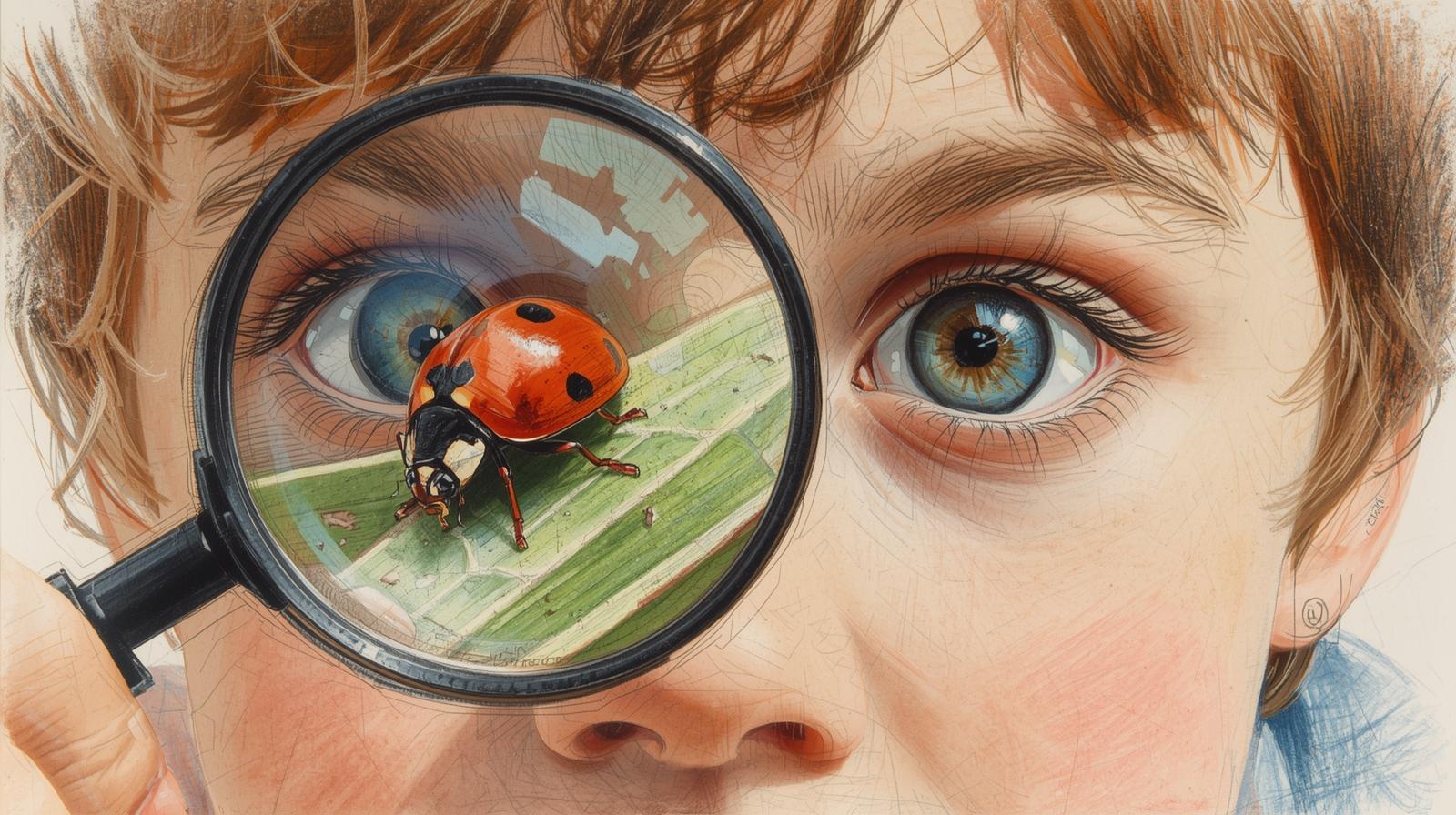
Description: A gentle expedition to discover the tiny creatures living right in your backyard.
Materials Needed: A magnifying glass; a clear jar with air holes in the lid (optional).
How to Do It: Go on a safari to find insects and other small creatures. Look under rocks for roly-polies, on leaves for ladybugs, and on flowers for bees. A magnifying glass makes this feel like a real scientific expedition. Remember the rule: we can look, but we don’t harm our tiny friends.
Learning Objective: Fosters respect for living creatures, introduces basic biology concepts, and sharpens observation skills.
3. Animal Track Detectives

Description: A mystery-solving game to figure out which animals have visited your area.
Materials Needed: A patch of mud, sand, or snow.
How to Do It: After a rain or in a soft patch of dirt, go on a hunt for animal tracks. Look for the footprints of squirrels, birds, or maybe even a neighborhood dog or cat. Wonder together: “Who made this track? Where do you think they were going?”
Learning Objective: Develops critical thinking, inference skills, and an awareness of the local ecosystem.
4. Bird Watching & Listening
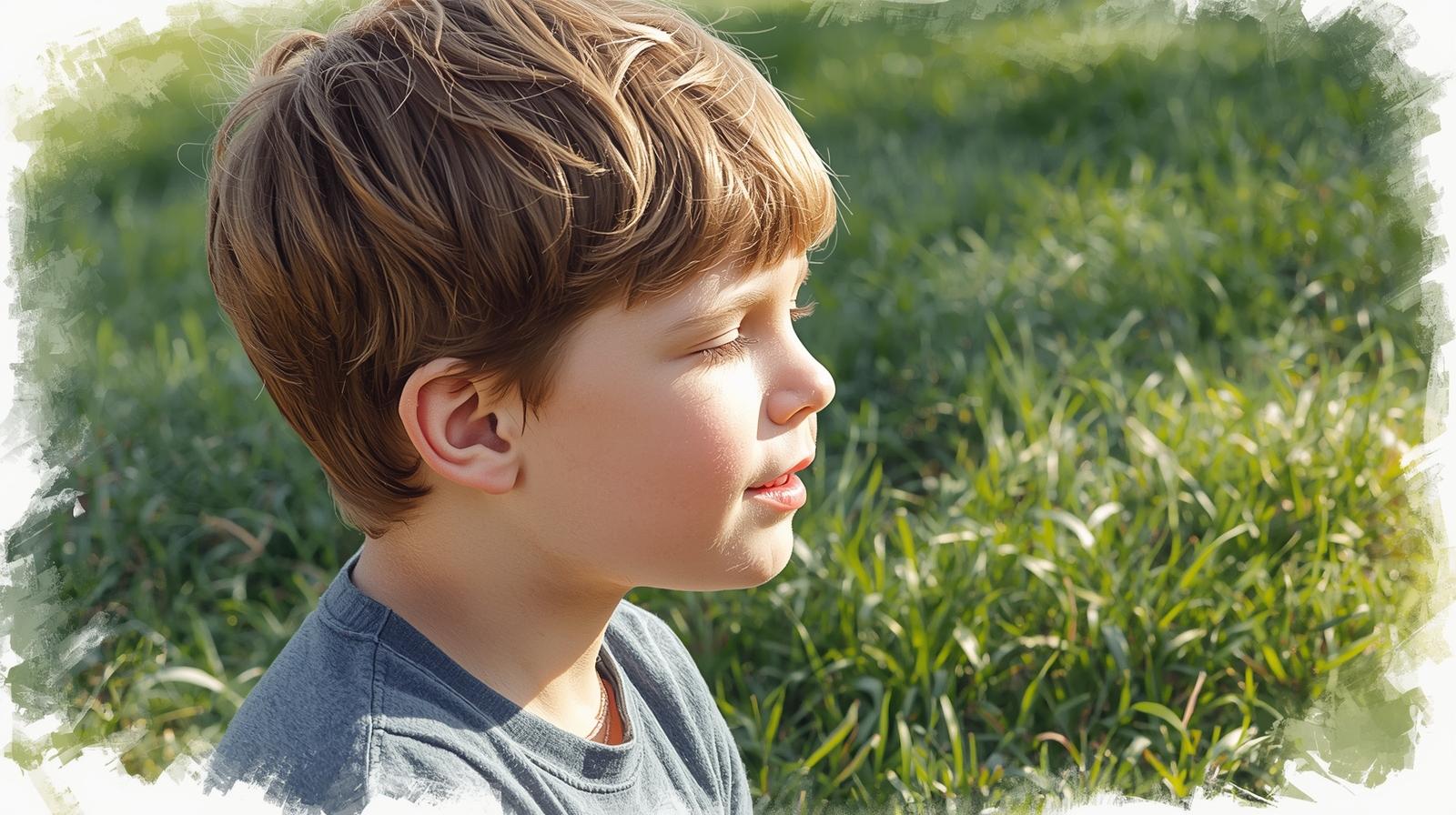
Description: A calm, mindful activity to tune into the sounds and sights of local birdlife.
Materials Needed: Just your eyes and ears; binoculars are a fun bonus.
How to Do It: Find a quiet spot to sit for five minutes. Ask your child to close their eyes and just listen. How many different bird songs can they hear? Then, open your eyes and try to spot the birds making the sounds. Imitate their calls together.
Learning Objective: Builds patience, focus, and auditory discrimination skills.
5. The Journey Stick
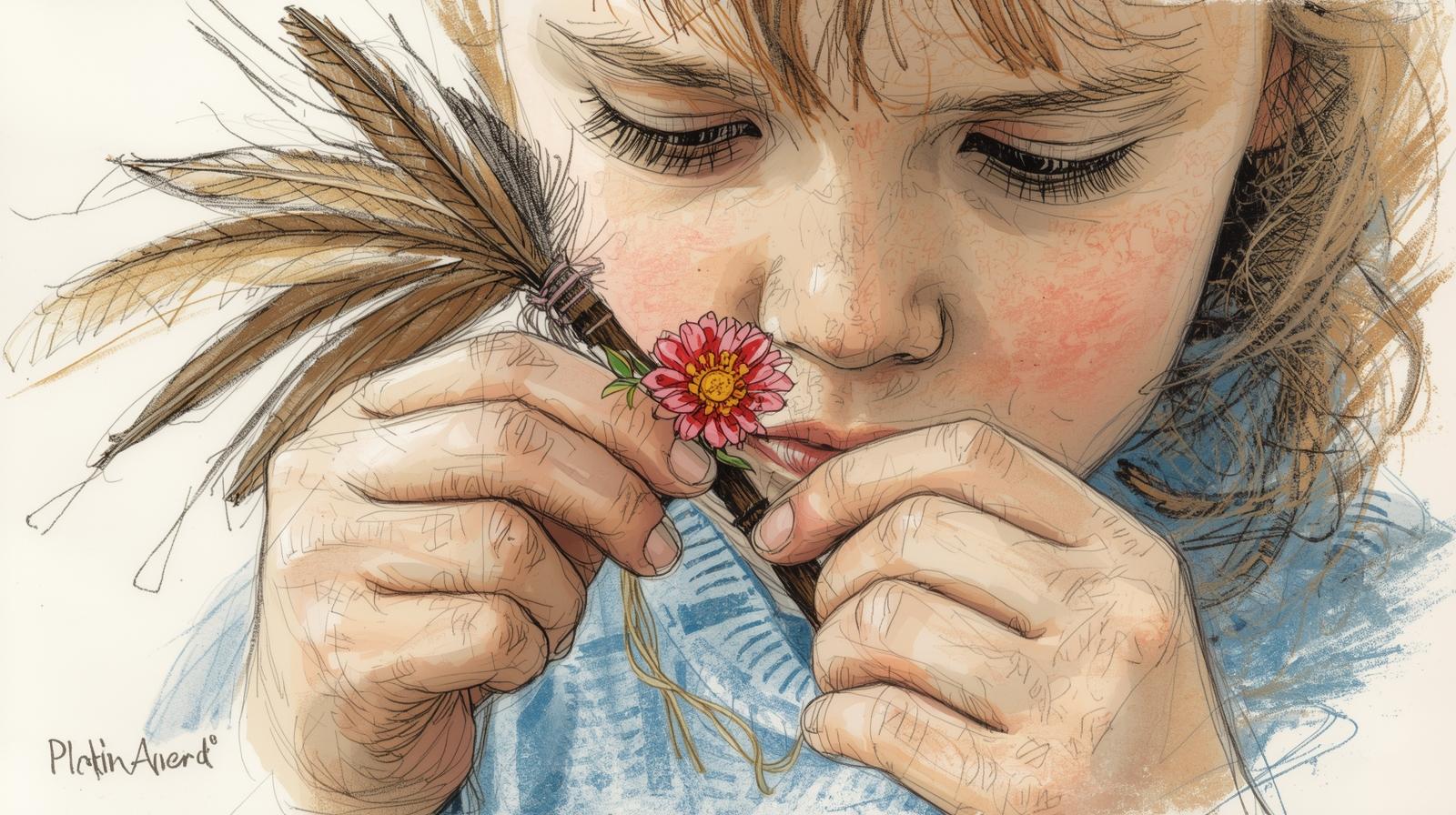
Description: A creative craft that tells the story of your outdoor adventure.
Materials Needed: A sturdy stick (about the length of your child’s forearm); yarn or string.
How to Do It: As you go on a walk, have your child collect small, interesting “treasures”—a unique leaf, a pretty feather, a small, smooth stone. Periodically, stop and help them tie their treasure onto the stick with the yarn. At the end of the walk, the stick holds a physical memory of everything you discovered.
Learning Objective: Enhances storytelling, sequencing (what did we find first?), and fine motor skills (wrapping the yarn).
6. Nature Sounds Map
Description: A unique art project that visually maps the sounds around you.
Materials Needed: A large piece of paper or cardboard and a crayon.
How to Do It: Sit in the middle of a park or your backyard. Place a dot in the center of the paper to represent “us.” Ask your child to close their eyes and point in the direction of every sound they hear. For each sound, make a mark on the paper in that direction—a squiggly line for the wind, a star for a bird chirping, a circle for a distant dog bark.
Learning Objective: Develops auditory awareness, spatial reasoning, and symbolic representation.
7. Weather Reporter
Description: A simple daily routine to practice observation and scientific language.
Materials Needed: None!
How to Do It: Each day, make it a special job for your child to be the “weather reporter.” Step outside for a minute and ask them to report what they see and feel. Guide them with questions: “Is the sun hiding or out today? Do you feel a wind? Are the clouds white and puffy or gray and sleepy?”
Learning Objective: Teaches scientific observation, builds descriptive vocabulary, and fosters an awareness of their environment.
Become Outdoor Storytellers: Activities for Imagination & Language
The outdoors is the perfect stage for sparking imagination and building a rich vocabulary. These activities encourage your preschooler to create, pretend, and tell stories using the natural world as their inspiration.
8. Nature Faces
Description: A simple, creative art project that uses natural materials to explore emotions and self-expression.
Materials Needed: A collection of natural “loose parts” like leaves, pebbles, flower petals, grass, and twigs.
How to Do It: Find a clear patch of dirt or use a piece of cardboard as a canvas. Encourage your child to create a face using the materials they’ve gathered. A large leaf could be the head, pebbles for eyes, a twig for a smile (or a frown!).
Learning Objective: Fosters creativity, symbolic thinking, and helps children learn to identify and express different emotions.
9. Cloud Gazing Stories
Description: A calm and imaginative activity that turns the sky into a giant storybook.
Materials Needed: A blanket and a patch of grass.
How to Do It: Lie on your backs together and watch the clouds. Take turns pointing out shapes you see (“That one looks like a dragon!”). Then, build a story around them. “The dragon is chasing that little bunny cloud! Where do you think they’re going?”
Learning Objective: Develops imagination, storytelling skills, and creative thinking.
10. Nature’s ‘This or That’
Description: A high-energy game that combines movement with learning descriptive words.
Materials Needed: None! Just your surroundings.
How to Do It: Give your child a choice between two concepts and have them run to an object that matches. “Let’s find something ROUGH (like tree bark) or something SMOOTH (like a leaf)!” “Run to something TALL (a tree) or something SHORT (a flower)!” It’s a fun, physical way to bring vocabulary to life.
Expert Tip: This is a perfect outdoor version of our popular guide to ‘This or That’ questions for kids, turning a fun conversation game into an active adventure.
Learning Objective: Teaches descriptive adjectives, listening skills, and gross motor skills.
11. The Outdoor ‘All About Me’ Portrait
Description: A large-scale self-portrait project using only materials found in nature.
Materials Needed: A collection of natural materials.
How to Do It: Find a clear area of dirt or grass. Have your child lie down for a moment while you quickly trace their outline with a stick. Then, let them “fill in” their portrait using natural items: grass for hair, pebbles for eyes, a red berry for a mouth, a leafy branch for an arm. It’s a wonderful way to explore self-identity.
Expert Tip: This is a beautiful, large-scale, outdoor version of the kind of self-exploration we encourage in our ‘All About Me’ activities.
Learning Objective: Develops self-awareness, creativity, and classification skills (sorting materials).
12. Shadow Puppet Theater
Description: Using the sun and your hands to create a simple, magical puppet show.
Materials Needed: A sunny day and a clear surface (like a sidewalk or the side of a house).
How to Do It: Stand with the sun behind you and show your child how to make simple hand shapes (like a bird or a rabbit) and watch their shadows appear. Create simple stories with your shadow puppets. “Look, the bunny is hopping away from the big, scary bird!”
Learning Objective: Teaches the basics of light and shadow, promotes storytelling, and develops fine motor control in the hands.
The Outdoor Academy: Learning Letters & Numbers in Nature
Who says you need flashcards to learn the ABCs and 123s? The natural world is filled with shapes, patterns, and countable objects. These educational outdoor activities for preschoolers seamlessly blend academic skills with the joy of fresh air.
13. Alphabet Obstacle Course
Description: A high-energy game that combines gross motor skills with letter recognition.
Materials Needed: Sidewalk chalk.
How to Do It: Draw large uppercase letters randomly around a patio or driveway. Call out a letter sound (“Find the /b/ sound!”) or a letter name (“Run to the letter A!”). Have your child run, jump, or hop to the correct letter. You can add extra obstacles like “crab-walk to the T!”.
Learning Objective: Reinforces letter recognition and letter sounds while developing gross motor skills and agility.
14. Nature Letters & Numbers
Description: A hands-on activity using natural materials to form letters and numbers.
Materials Needed: A collection of twigs, pebbles, leaves, or pinecones.
How to Do It: Encourage your child to form letters using the items they’ve collected. Two long twigs can make an ‘X’, a curved branch can be a ‘C’, a collection of small pebbles can form an ‘S’. It’s a tactile way to understand how letters are constructed.
Expert Tip: After they’ve physically built the letters, you can reinforce the motor plan for writing them with our ABC tracing worksheets.
Learning Objective: Teaches letter and number formation, develops fine motor skills, and fosters creativity.
15. Chalk Counting Garden
Description: An art-based activity that practices counting and one-to-one correspondence.
Materials Needed: Sidewalk chalk.
How to Do It: Draw several large circles on the ground to be the centers of flowers. In each circle, write a different number (e.g., 3, 5, 8). The mission is for your child to draw the correct number of petals around each flower’s center.
Learning Objective: Practices number recognition and one-to-one correspondence in a creative, large-scale way.
16. Acorn Shapes
Description: A simple sorting and geometry game using natural items.
Materials Needed: A stick or chalk, and a collection of acorns, pebbles, or leaves.
How to Do It: Draw large, simple shapes on the ground (a square, a circle, a triangle). Have your child identify each shape and then use their collection of acorns or pebbles to trace the outline.
Learning Objective: Reinforces shape recognition and develops fine motor skills.
17. Color Hop
Description: An active game to practice color recognition and listening skills.
Materials Needed: Sidewalk chalk in multiple colors.
How to Do It: Draw several large, colored circles on the ground, spaced a little apart. Call out a color (“Hop to the red circle!”). Your child has to find and hop into the correct circle. You can make it more complex by calling out a sequence: “First the blue, then the yellow!”.
Learning Objective: Teaches color recognition, listening skills, and gross motor control.
F.A.Q. about Outdoor Activity
Making outdoor learning a regular part of your routine can bring up some practical questions. Here are our expert answers to the most common queries from parents.
What is the single best outdoor activity if I only have 10 minutes?
A 'Sensory Scavenger Hunt'. It requires no setup and is incredibly effective. Dont just look for items; look for textures and feelings. The mission can be: 'In the next 10 minutes, let's find and touch something bumpy, something smooth, something wet, and something crunchy'. This activity engages multiple senses and encourages mindful observation in a short amount of time.
What are the best outdoor activities that require absolutely no equipment?
Some of the best activities require nothing but your imagination. Our top three no-equipment games are: 1. Cloud Gazing Stories (lying on your back and making up stories about the cloud shapes), 2. Animal Walks (challenging each other to move like a bear, a crab, or a frog), and 3. Nature Sounds Map (closing your eyes and pointing to where you hear sounds). These build creativity, gross motor skills, and listening skills with zero prep.
How do I adapt these activities for a younger toddler (age 2-3)?
Great question! For younger toddlers, the key is to simplify and focus on sensory exploration. For a 'Nature Scavenger Hunt', instead of a long list, focus on finding just one thing, like 'Let's find all the yellow flowers!'. For art activities like 'Nature Faces', focus on the tactile experience of touching the leaves and grass rather than creating a perfect final product. Keep the activities shorter and celebrate the exploration itself.
Which outdoor activities are best for building confidence?
Activities that involve healthy, manageable risks are the best confidence boosters. Things like climbing a small hill, walking along a log like a balance beam, or carrying a heavy rock from one place to another teach children to trust their bodies and overcome small challenges. When they succeed, the sense of accomplishment is a powerful boost to their self-esteem.
It's raining! What can we do?
Unless it's a thunderstorm, rain is just another wonderful sensory experience! Put on rain boots and a jacket and go on a 'Puddle Jumping' expedition. Listen to the sound the rain makes on different surfaces. Go on a 'Worm Hunt'—rainy days are the best time to find them! Embracing all kinds of weather teaches resilience and a deeper appreciation for nature.
Learning is everywhere: A final word for Parents
As you’ve seen, you don’t need a perfectly planned lesson or expensive equipment to turn an afternoon outside into a powerful learning experience.
The natural world is the ultimate open-ended toy, offering endless opportunities for discovery, creativity, and connection. The most important tool you can bring is your own willingness to slow down, observe, and wonder alongside your child.
Don’t feel pressured to complete all 20 of these activities. Choose one or two that spark your interest and fit your day. The goal is not to check off a list, but to build a joyful and consistent routine of outdoor exploration.
By doing so, you are not just teaching them about nature; you are giving them a foundation of resilience, a love for discovery, and memories that will last a lifetime. The best classroom has no walls.