

You see it on the cubbies at daycare or on the artwork proudly displayed on the preschool wall: other children’s names, scribbled in bold crayon. Whether your child is a 3 or 4-year-old preschooler or a 5-year-old getting ready for kindergarten, you might feel a familiar pang of worry if their own name is still a mystery to them.
The thought is almost universal: “My kid can’t write their name… are they falling behind?”
Let’s start with some reassuring data. Developmental research shows that while some children begin forming recognizable letters around age 4, the ability to consistently and legibly write their first name is a milestone most children master between the ages of 4 and 5.
Many don’t fully consolidate this skill until they are well into their kindergarten year. In short, it is completely normal for a preschooler to still be learning.
Writing a name isn’t a single skill; it’s the final product of at least three foundational abilities: recognizing the letters, having the fine motor strength to hold a tool, and knowing how to make the basic lines and curves that form the letters.
The good news is that you can build these skills easily at home, without tears. This guide is a gentle, step-by-step plan based on fun, playful name writing activities, designed to show you exactly how to help your child on this important journey.
Understanding the ‘Why’: The 3 Building Blocks of Name Writing
Before a child can successfully write their name, three foundational skills must be in place. Think of it like building a house: you can’t put up the walls before the foundation is poured.
Often, a child’s struggle with writing isn’t a single problem, but a weakness in one of these three building blocks. Let’s play detective and see which area might need a little extra support.
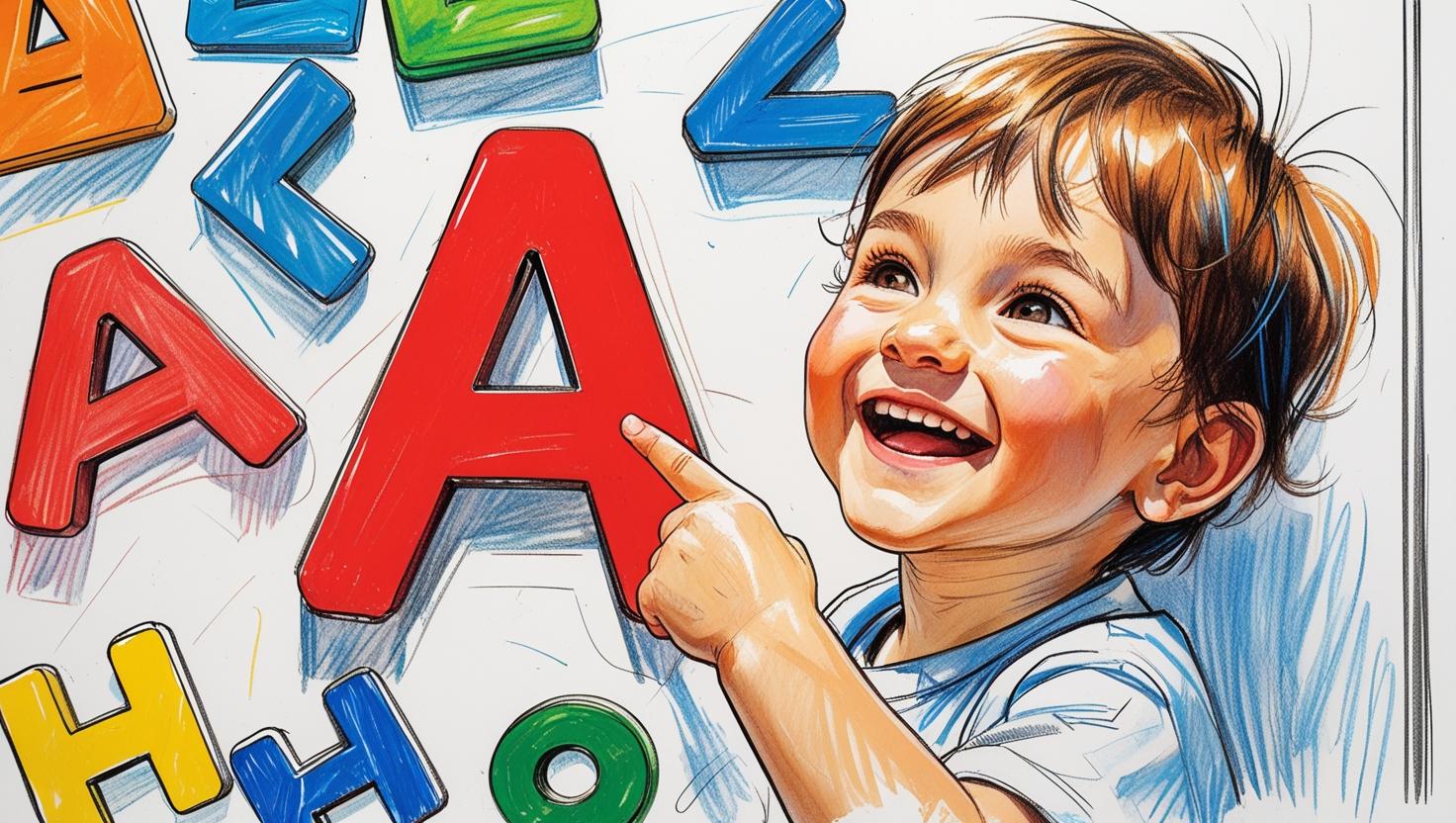
Building Block n.1: Letter Recognition
This seems obvious, but it’s often overlooked. A child cannot write a name if they don’t know which letters are in it. The first step is purely cognitive. Can your child:
- Identify the letters in their name from a group of other letters?
- Point to the first letter of their name?
- Put magnetic letters of their name in the correct order?
If the answer is ‘no’, then the challenge isn’t about writing—it’s about letter familiarity. All your focus should be on fun, no-pressure letter recognition games first.
Building Block n.2: Fine Motor Skills
Writing is a physical activity. It requires a whole team of small muscles in the hand to work together. If these muscles aren’t strong enough, holding and controlling a pencil is frustrating and exhausting. This is often the biggest hurdle for 4-year-olds.
The good news is that these muscles are built through play, not drills. For a deep dive into this topic, you can explore the essential fine motor skills for handwriting. Activities like playing with Play-Doh, using tweezers to pick up pom-poms, or squeezing a spray bottle are all powerful ways to build this strength.
Building Block n.3: Pre-Writing Strokes
Every letter of the alphabet is just a combination of simple lines and curves. Before a child can form a complex letter like ‘A’ or ‘B’, they must first be able to make the individual components: a straight vertical line, a straight horizontal line, a circle, a cross, and diagonal lines.
This is the final, crucial piece of the puzzle. Spending time mastering pre-writing strokes through tracing activities makes the eventual jump to writing actual letters feel natural and easy, rather than overwhelming.
The Step-by-Step ‘No-Tears’ Game Plan

Now that you’re a detective and have a good idea of which building block needs the most support, it’s time for the fun part. The golden rule for teaching any skill at this age is to make it playful, not procedural.
Research from institutions like the National Association for the Education of Young Children (NAEYC) consistently shows that young children learn best through hands-on, meaningful play. This four-phase game plan is designed around that principle.
Phase 1: Make Their Name a ‘Celebrity’ (Recognition Games)
Before they can write it, their name needs to be the most exciting word they know. Make it a ‘celebrity’ in your house. Write it everywhere. Point it out. Celebrate it.
- The Name Hunt: Write their name on several sticky notes and hide them around a room. Go on a hunt together to find “your special word!”
- The ‘Sign-In’ Sheet: Create a playful ‘sign-in’ sheet for activities like screen time or snack time. They don’t have to write their name, just find it on the list and put a sticker next to it.
Phase 2: Build It, Don’t Write It (Sensory Activities)
This phase builds a mental and physical map of the letters without the pressure of a pencil. The goal is to feel the shapes of the letters.
- Play-Doh Snakes: Roll out Play-Doh into ‘snakes’ and form the letters of their name.
- Sensory Tray Writing: Pour salt, sand, or even shaving cream into a shallow tray. Show them how to trace the letters of their name with their finger. It’s fun, messy, and highly effective.
Phase 3: The Magic of Muscle Memory (Tracing)
Once their hands are strong and they know what the letters look like, it’s time to introduce a writing tool. Tracing is the bridge between knowing a letter and writing it independently. It builds the ‘muscle memory’ needed for fluid writing.
This is where a well-designed tool can make all the difference. You can start immediately with our free Name Tracing worksheets. They provide the perfect level of scaffolding to make your child feel successful.
Phase 4: From Tracing to Trying (First Writing Attempts)
When they can trace their name confidently, it’s time to encourage their first independent attempts. Use a highlighter to write their name and have them trace over it with a marker. Then, encourage them to try writing it right underneath. Celebrate the effort, not the perfection. The first wobbly, oversized letter is a huge victory!
3 Common Mistakes to Avoid (And What to Do Instead)
As you start this journey, your mindset is just as important as the activities you choose. We often see well-intentioned parents accidentally make the process of learning to write a name more stressful than it needs to be. Avoiding these three common pitfalls can make all the difference and prevent future name writing problems.
Mistake n.1: The ‘Drill Sergeant’ Approach (Pressure & Repetition)
- What it looks like: Forcing your child to sit and practice “just one more time” when they are clearly frustrated or tired. Turning writing into a daily chore.
- Why it backfires: For a 4-year-old, learning happens through joy and curiosity, not forced repetition. When you apply pressure, their brain associates writing with negative feelings like stress and failure, which can lead to a long-term aversion to it.
- What to do instead: Keep it short, sweet, and playful. Five minutes of a fun, sensory name game is far more effective than 20 minutes of tearful tracing. If they resist, stop immediately and try again another day with a different, more engaging activity.
Mistake n.2: The ‘One-Size-Fits-All’ Tool (Using the Wrong Utensil)
- What it looks like: Handing your 4-year-old a standard-sized pencil or a thin pen and expecting them to have good control.
- Why it backfires: A young child’s hand muscles are still developing. Using a tool that is too thin or long requires a level of fine motor control they simply don’t have yet, leading to a frustrating, fist-like grip. It’s like asking an adult to write with a giant, unwieldy log.
- What to do instead: Start with tools that are short and chunky. Broken crayons, small pieces of sidewalk chalk, golf pencils, or short, fat markers are ideal. These naturally encourage a better grip and are much easier for little hands to control.
Mistake n.3: The ‘Perfection Police’ (Correcting Every Mistake)
- What it looks like: Immediately pointing out a reversed letter or a wobbly line. Saying things like, “That’s not how you make an ‘E’.”
- Why it backfires: At this stage, the goal is effort and exploration, not perfection. Constant correction erodes a child’s confidence and makes them afraid to even try. Letter reversals are a completely normal and expected part of development for children under the age of 7.
- What to do instead: Celebrate the attempt, not the accuracy. Say, “Wow, I see you wrote an ‘E’! You really worked hard on that!” Model the correct formation yourself on a separate piece of paper without making them ‘fix’ theirs. Positive reinforcement is the fastest path to progress.
10 F.A.Q. About Name Writing
Navigating early childhood milestones can bring up a lot of questions. Here are our expert answers to the most common queries parents have about writing and other academic skills.
Should a kindergartener be able to write their name?
Yes, by the time a child enters kindergarten (typically age 5), it is a standard and very helpful milestone for them to be able to write their first name. They are not expected to write it perfectly—the letters might be shaky, oversized, or have some reversals—but the ability to form the letters of their name is a key readiness skill for that age.
How do I teach a 5-year-old to write their name?
For a 5-year-old, you can move a bit more quickly than with a 4-year-old. Start by ensuring they have a strong pencil grasp. Use a highlighter to write their name and have them trace over it. Then, encourage them to write it right underneath your model. Our free name tracing worksheets are an excellent tool for this stage. The key is consistent, short, and positive practice sessions.
Should a 3-year-old be able to write their name?
No, this is not a typical expectation for a 3-year-old. At this age, the focus should be on pre-writing skills: scribbling, making vertical and horizontal lines, and forming circles. They should be building hand strength through play (Play-Doh, blocks). A more realistic milestone for a 3-year-old is the ability to recognize their name, not write it.
What are the signs of a writing readiness delay?
Instead of looking for delays, it's more helpful to look for a lack of foundational skills. By age 4.5 or 5, if a child shows little interest in drawing or scribbling, struggles to hold a crayon with anything other than a fist, and cannot yet make a simple cross (+) or circle, it might be a good time to talk to a pediatrician or an occupational therapist. These are often signs of weak fine motor skills that can be improved with targeted play.
Should a 5-year-old be able to write other letters or just their name?
While writing their name is the primary goal, many 5-year-olds entering kindergarten can write several other uppercase letters, especially those with simple straight lines (L, T, H, I, E, F). They may also be able to write letters from a parent's or sibling's name. There is no expectation that they can write the entire alphabet independently upon entry.
Should a 2.5-year-old know the ABCs?
No, there is no academic expectation for a 2.5-year-old to know the alphabet. At this age, a great goal is for them to enjoy singing the ABC song and to be exposed to letters through books and puzzles. The focus should be on language development through conversation and play, not rote memorization of letters.
How high should a 3-year-old be able to count?
Most 3-year-olds can rote count to 10 (meaning they can say the numbers in order). Many can also count a small group of 2-3 objects, pointing to each one. This skill, called one-to-one correspondence, is a more important developmental milestone than simply being able to recite numbers up to 20 or 30.
What should a 2.5-year-old know academically?
At 2.5, 'academics' are all about exploration and language. A child in this age range is typically learning to identify a few colors, point to pictures in a book when named, and follow simple 2-step directions ('Get your shoes and bring them to me'). Their primary 'job' is to learn through play and conversation, not formal academic skills.
How to tell if a 2.5-year-old is gifted?
Identifying giftedness at this age is very difficult, as children develop at vastly different rates. Some early signs might include an unusually large vocabulary and the ability to speak in complex sentences, an intense curiosity and ability to focus on a topic of interest for long periods, or an early understanding of complex cause-and-effect. However, many of these can also just be signs of a bright, developing child. Formal assessment for giftedness is typically not considered until a child is much older.
Celebrating Progress on the Name Writing Journey
Helping your 4-year-old learn to write their name is a journey, not a race. There will be days of exciting progress and days of frustrating setbacks. The most important thing you can offer is patience, encouragement, and a playful attitude. Remember to celebrate the small victories—the first time they recognize a letter, the moment they master a Play-Doh snake, their first wobbly, wonderful attempt at writing their name on their own.
By focusing on the fun, sensory-rich activities in this guide, you are doing more than just teaching them to write; you are building a positive and joyful foundation for all the learning that is to come. You are teaching them that learning is an adventure, not a test.
Once your child has mastered their own name, you’ll often find their curiosity for the other letters of the alphabet explodes.
When they are ready for that next step, if you’re looking for a comprehensive, play-based approach, our team has designed the complete Alphabet Worksheet Bundle. It’s the perfect way to channel their new confidence into mastering the entire ABCs, turning their first big writing win into a lifelong love of learning.