
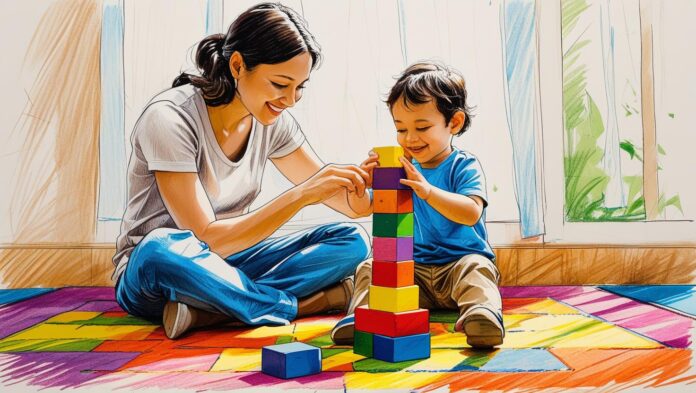
As a parent, you’re an expert at tracking milestones. You celebrated the first step, the first word, the first time they stacked three blocks. But what if there was a way to see the bigger picture behind these individual achievements? A way to understand not just what your child is doing, but how all the pieces of their growth fit together, especially during the crucial ages of 3 to 5?
Welcome to the world of developmental domains. While it sounds like a term from a textbook, it’s simply a way for experts to look at the ‘whole child’. Think of it like this: a single milestone, like your child building a tower, isn’t just about motor skills. It’s also about cognitive skills (planning), social-emotional skills (persistence), and language (telling you about it!). Understanding these areas is key for any parent navigating the developmental domains of early childhood.
This guide is your simple, jargon-free map. We will translate these professional concepts into a practical guide, showing you how they fit into the broader stages of child development. This is about seeing the complete picture of your amazing, growing child.
What Are the 5 Developmental Domains? A Quick Overview
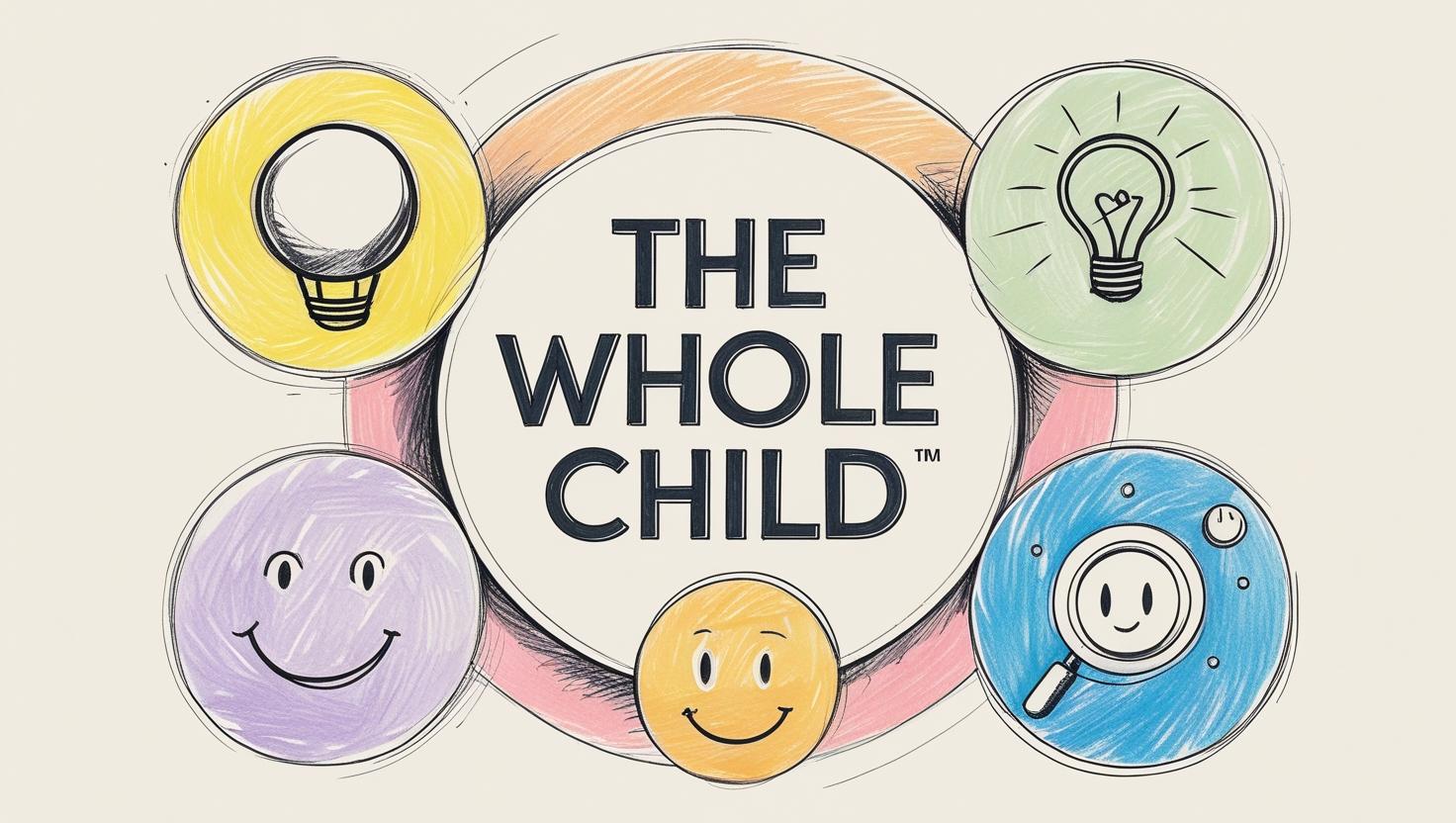
While different experts sometimes categorize them slightly differently, most early childhood educators and organizations like the CDC and Head Start focus on five core areas of development. Understanding these developmental domains helps you see that every play activity, conversation, and daily routine is nurturing a different, vital part of your child’s growth. They are all interconnected, working together to build a capable, confident child.
Here are the five key domains we will explore in this guide:
- Physical Development: This covers how your child’s body grows and moves, from big movements like running (gross motor skills) to small ones like holding a crayon (fine motor skills).
- Cognitive Development: This is the ‘thinking’ domain. It includes how your child learns, solves problems, remembers things, and shows curiosity about the world around them.
- Social and Emotional Development: This is the ‘feeling’ domain. It’s about how your child understands their own emotions, shows empathy for others, and builds relationships with peers and adults.
- Language and Communication Development: This involves how your child understands what is said to them (receptive language) and how they use sounds, gestures, and words to express their own needs and ideas (expressive language).
- Approaches to Learning: This is a crucial domain that describes how a child learns. It includes skills like persistence, creativity, focus, and a willingness to try new things.
Let’s take a closer look at each of these domains and what they look like in your preschooler.
1. Physical Development: The Power of Movement
Physical development is often the easiest domain for parents to see and celebrate. It’s the tangible progress of your child growing stronger, faster, and more coordinated. This domain is typically broken down into two key areas, both of which are developed almost entirely through active play.
Gross Motor Skills: Building a Strong Body
These are the ‘big muscle’ movements that involve the whole body. For a preschooler (ages 3-5), you’ll see these skills blossom as they gain confidence and control.
- What it looks like: Running without frequently falling, jumping with two feet, kicking a ball forward, climbing playground equipment, and beginning to pedal a tricycle.
- How to support it: The answer is simple: more unstructured outdoor play. Time at the park, in the backyard, or just walking in nature allows them to test their limits and build strength in a natural, joyful way.
Fine Motor Skills: Mastering Precise Movements
These are the ‘small muscle’ movements, primarily in the hands and fingers, that allow for detailed work. These skills are the direct foundation for future academic tasks like writing and cutting.
- What it looks like: Stacking a tower of six or more blocks, drawing a circle, using child-safe scissors to snip paper, and beginning to hold a crayon with their fingers instead of their fist.
- How to support it: Provide plenty of hands-on, indoor activities. Playing with Play-Doh, threading large beads onto a string, working on simple puzzles, and coloring are all powerful ways to build these essential muscles. For a deeper look into this area, you can explore our complete guide to motor skills.
2. Cognitive Development: The ‘Thinking’ Brain

The cognitive domain is all about how your child’s brain processes information. It’s their ability to think, learn, remember, and solve problems. While it sounds academic, you can see these skills developing every day in the way your child plays and explores the world. For preschoolers, this isn’t about memorizing facts; it’s about building the foundational skills for future learning.
Key Cognitive Skills for Preschoolers
Here are some of the amazing things happening in your child’s ‘thinking brain’ between the ages of 3 and 5:
- Cause and Effect: They are beginning to understand that their actions cause a reaction. “If I push this button, the toy makes a sound.” “If I drop my cup, the milk spills.”
- Problem-Solving: You’ll see them start to use simple strategies to solve problems. For example, if a puzzle piece doesn’t fit, they will turn it around to try a different way instead of just forcing it.
- Symbolic Thinking: This is the foundation of all creativity and a huge leap in cognitive development. It’s their ability to make one thing stand for something else. A banana becomes a telephone; a block becomes a car. This is also crucial for learning that letters are symbols that represent sounds.
- Sorting and Classifying: They can begin to group objects by a single attribute, like color or shape. “Let’s put all the red blocks in this pile and all the blue blocks in that one.”
How to Nurture Cognitive Growth
The best way to support this domain is by encouraging their natural curiosity. Ask open-ended ‘wonder’ questions like, “I wonder what would happen if we mixed the blue and yellow paint?” and give them plenty of time for unstructured play with simple, open-ended toys like blocks, art supplies, and dress-up clothes. This hands-on exploration is how they build critical thinking abilities, including developing skills like visual-spatial intelligence, which is key for everything from puzzles to math.
3. Social and Emotional Development: The ‘Feeling’ Heart
This domain is one of the most critical for kindergarten readiness and lifelong happiness. It’s your child’s ability to understand their own feelings, read the social cues of others, and build positive relationships. A child with strong social-emotional skills is a child who can navigate the playground, share with a friend, and ask a teacher for help—all essential skills for a happy school experience.
Key Social-Emotional Skills for Preschoolers
Between ages 3 and 5, your child is making huge leaps in this area. Here’s what to look for:
- Developing Empathy: They are beginning to notice and react to the feelings of others. They might offer a hug to a crying friend or show concern for a character in a book.
- Taking Turns: While still a work in progress, they are starting to understand the concept of sharing and taking turns in simple games.
- Expressing Emotions with Words: Instead of only crying or hitting when frustrated, they are beginning to use words like “I’m mad” or “I’m sad.”
- Developing a Sense of Self: They are becoming aware of their own identity, preferences, and abilities. They’ll proudly say “I can do it myself!” and love to talk about what makes them unique.
How to Support Their Social-Emotional World
Your role here is to be their ’emotions coach’. You can help them navigate their big feelings and build social confidence.
- Name the Feeling: When your child is upset, help them label the emotion. “It looks like you are feeling really frustrated because that tower keeps falling.” This gives them the vocabulary they need to understand themselves.
- Model, Don’t Just Tell: Talk about your own feelings in a simple way. “I’m feeling happy today because the sun is shining.” “I’m feeling a little sad that Grandma has to go home.”
- Celebrate Their Identity: A strong sense of self is the foundation of confidence. Encourage them to talk about themselves with fun ‘All About Me’ activities that celebrate their favorite things, their family, and what makes them special.
- Teach Problem-Solving: When they have a small conflict, guide them toward a solution instead of solving it for them. You can also help them learn to manage their ambitions and work towards a goal by helping them practice skills like goal-setting in a simple, visual way.
4. Language and Communication Development
While related to the cognitive domain, language and communication is so important that it stands on its own. This domain covers your child’s ability to both understand what is being said to them (receptive language) and to use sounds, gestures, and words to express their own needs and ideas (expressive language). A child with strong communication skills is better equipped to learn, make friends, and advocate for themselves in the classroom.
Key Communication Skills for Preschoolers
- Growing Vocabulary: Their vocabulary explodes during these years. A typical 4-year-old can know up to 1,500 words or more.
- Speaking in Sentences: They move from simple 2-3 word phrases to speaking in longer, more complex sentences of 5-6 words or more.
- Answering Questions: They can answer simple ‘who’, ‘what’, ‘where’, and ‘why’ questions.
- Telling Stories: They are beginning to tell simple stories about their day or from their imagination, even if the sequence of events is a bit jumbled.
How to Be Their Conversation Partner
The best way to support language development is simply by talking and reading with your child as much as possible.
- Read, Read, Read: Daily reading exposes them to a rich vocabulary they wouldn’t encounter in everyday conversation.
- Ask Open-Ended Questions: Instead of questions that can be answered with ‘yes’ or ‘no’, ask questions that require a more detailed response. Instead of “Did you have fun at the park?”, try “What was the most fun thing you did at the park today?”
- Be a Narrator: As you go about your day, narrate what you are doing. “I am cutting up this juicy red apple for our snack. Now I’m putting the slices on the plate.” This ‘sportscasting’ of your day provides a constant stream of rich language.
5. Approaches to Learning: The ‘How’ of Learning
This final domain is one that educators consider incredibly important, but it’s often invisible to parents. ‘Approaches to Learning’ doesn’t measure what a child knows, but how they learn. It describes their attitude and behaviors towards learning. A child with strong approaches to learning is a child who is curious, persistent, and engaged—the ideal student at any age.
Key ‘Approaches to Learning’ Skills for Preschoolers
These are the character traits and learning habits you can see developing in your child:
- Curiosity and Eagerness: Do they ask “Why?” a lot? Do they show excitement about trying new things and exploring new places?
- Persistence and Problem-Solving: When a block tower falls, do they try again? When a puzzle is tricky, do they stick with it for a few minutes before asking for help? This is a crucial skill for overcoming challenges.
- Focus and Attention: Are they able to focus on a single, preferred activity (like drawing or playing with a specific toy) for a sustained period of 10-15 minutes?
- Creativity and Imagination: Do they use toys in unconventional ways? Do they engage in rich, imaginative pretend play?
How to Foster Strong Learning Habits
You can’t “teach” curiosity, but you can create an environment where it thrives.
- Praise the Process, Not Just the Product: Instead of “What a smart boy!”, try “You worked so hard on that puzzle! I saw how you kept trying different pieces. That was great thinking!” This praises their persistence and effort.
- Don’t Solve Their Problems Too Quickly: When they get stuck, resist the urge to immediately jump in and fix it. Give them a moment of “productive struggle.” You can offer verbal support: “Hmm, that’s a tricky one. What do you think you could try next?”
- Model Curiosity Yourself: Let them hear you wonder out loud. “I wonder why the leaves are all changing color. Let’s look it up!” Your curiosity is contagious.
Supporting the Whole Child: A Final Word for Parents
As you’ve seen, the developmental domains of early childhood are not separate boxes to be checked off a list. They are beautifully interconnected, with progress in one area often sparking growth in another.
A child who gains the physical confidence to climb the slide (Physical) also gains the social confidence to ask another child to play (Social-Emotional). A child who learns to express their frustration with words (Language) can persist longer at a tricky puzzle (Cognitive).
Your role in this incredible journey is not to be a drill sergeant, but to be an observant and loving guide. The most powerful tool you have to support all five domains at once is simple: play. By creating a safe and engaging environment for play, you are giving your child’s brain and body exactly what they need to grow.
As you observe your child’s unique strengths and interests, you’ll naturally find areas where they are ready for a new, playful challenge. To help you provide those targeted learning moments, our team has designed our complete bundle of educational worksheets. It’s packed with hundreds of fun activities designed to support every developmental domain, making it easy for you to nurture your ‘whole child’ every single day.
F.A.Q. Top 10 Questions About Developmental Domains Answered
The world of child development is full of professional terms that can be confusing. Here are our expert answers to the most common questions parents ask about developmental domains.
Why do some experts say there are 4 domains and others say 5 or even 7?
This is a fantastic question and the biggest source of confusion. The truth is, all experts are looking at the same 'whole child', they just categorize the skills differently. The 4-domain model often combines 'Language' and 'Cognitive'. The 5-domain model (which we use and is favored by programs like Head Start) separates them to give language its own focus. Other frameworks, like the UK's EYFS, use 7 areas. For parents in the US, the 5-domain model provides the clearest and most comprehensive picture.
What's the difference between a 'domain' and a 'stage' of development?
Another crucial distinction! A Domain is a category of skills (like Physical or Cognitive) that are developing continuously. A Stage is a period of time in a childs life (like the 'toddler stage' or Piagets 'preoperational stage'). Think of it this way: your child is in the 'preschool stage', and during that stage, they are growing in all five 'domains' at the same time.
Which developmental domain is the most important?
This is like asking which part of a car is most important—the engine, the wheels, or the steering wheel? They are all interconnected and essential. While Social-Emotional development is often considered the foundation upon which all other learning is built, a child cannot develop socially without language to communicate, or cognitively without the physical ability to explore their world. The goal is to support the 'whole child', as growth in one domain fuels growth in all the others.
How do I know if my child is 'on track' in these domains?
Focus on a range, not a rigid date. Milestones are guides, not deadlines. The best way to know if your child is on track is through mindful observation (anecdotal records are perfect for this!) and regular check-ups. If you notice your child is consistently struggling in one area compared to their peers, or if they have lost a skill they once had, it is always a good idea to share your specific observations with your pediatrician.
Can a child be strong in one domain but seem 'behind' in another?
Yes, absolutely. In fact, uneven development is the norm, not the exception. It is very common for a preschooler to be a gifted climber with excellent gross motor skills, but still be developing their fine motor skills for drawing. Or they might be a fantastic talker (strong Language domain) but still learning how to share (Social-Emotional domain). Celebrate their strengths while gently supporting the areas that are still emerging.
How do these domains relate to kindergarten readiness?
They are the very definition of kindergarten readiness. A 'ready' child is not just one who knows their ABCs (Cognitive domain). A truly ready child is one who is reasonably developed across ALL five domains. They have the physical stamina for a long day (Physical), the emotional skills to handle small frustrations (Social-Emotional), the language to ask for help (Language), and the curiosity to participate (Approaches to Learning).
What is the single best activity that supports all five domains at once?
Open-ended, imaginative play. Think about a simple activity like playing with blocks. Physical: lifting and stacking. Cognitive: planning the structure and solving balance problems. Language: describing their creation. Social-Emotional: feeling proud of their work or negotiating with a friend over a block. Approaches to Learning: using creativity and persisting when the tower falls. Play is the ultimate whole-child workout!
Do I need to understand complex theories like Piaget's stages?
Not at all. While theories from psychologists like Piaget are fascinating and form the foundation of early childhood education, you do not need to be an academic expert to be an amazing parent. Understanding the five practical domains as we have laid them out in this guide is more than enough to help you observe, understand, and support your childs incredible journey.