
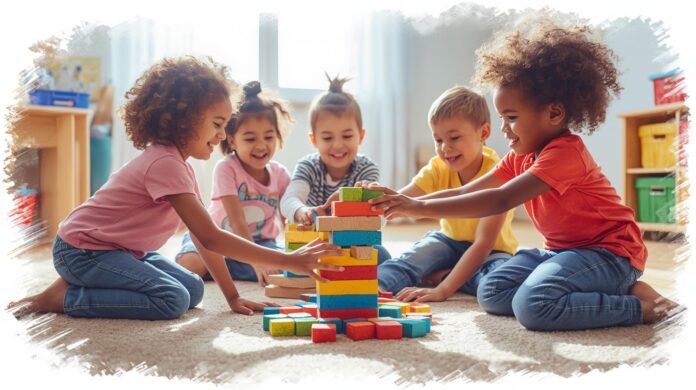
When we think about ‘social skills’ for preschoolers, one phrase usually comes to mind: “learning to share.” While sharing is important, it’s only one small piece of a much larger, more incredible puzzle.
As a team of early childhood experts, we know that true social skill is a superpower. It’s the ability to walk into a room and make a friend, to lose a game without a meltdown, to understand another person’s feelings, and to work as part of a team. These are the foundational skills that predict a child’s future happiness and success far more than any academic benchmark.
The great news is that these skills are not something a child either ‘has’ or ‘doesn’t have’—they can be taught. And the best way to teach them is not through lectures or forced apologies, but through joyful, intentional play.
This guide is your ultimate playbook. We’ve compiled over 25 fun, practical, and powerful social skills activities for preschoolers that you can start using today. We’ve broken them down into the 5 core social competencies that truly matter, giving you a complete curriculum for raising a kind, confident, and socially intelligent child.
Category 1: Sharing & Taking Turns – The Foundation of Friendship
This is the classic preschool social challenge. As experts, we want to reassure you: it is developmentally normal for a 3 or 4-year-old to struggle with sharing.
Their sense of self is still forming, and to them, a toy they are holding can feel like a part of their own body. Our goal is not to force them to share, but to create positive experiences that teach the joy and benefit of taking turns.
1. The “Timer Trick” for Coveted Toys
Description: A simple, visual way to manage turn-taking with a single, popular toy.
Materials Needed: A visual timer (like a sand timer or a kitchen timer).
How to Do It: When two children want the same toy, introduce the timer. Say, “Okay, Liam gets to use the red truck for three minutes, and then when the timer beeps, it’s Chloe’s turn.” The timer becomes the ‘bad guy’, not you. It’s a neutral authority that makes the transition less personal.
Learning Objective: Teaches delayed gratification and the concept that “my turn will come.”
2. Cooperative Building
Description: An activity where the goal can only be accomplished by working together and sharing materials.
Materials Needed: A single large set of building blocks, LEGOs, or magnetic tiles.
How to Do It: Set a collaborative goal. “Let’s build the tallest tower in the whole world, together!” By focusing on a shared goal, sharing the blocks becomes a necessary and positive part of the game, not a sacrifice. This moves them beyond the natural stages of play like parallel play and into a more cooperative mindset.
Learning Objective: Fosters teamwork and shows that sharing leads to a bigger, better outcome.
3. “You Pick, I Pick” Board Games
Description: Simple board games are turn-taking machines.
Materials Needed: A simple, age-appropriate board game (like Candy Land or Chutes and Ladders).
How to Do It: The structure of a board game naturally teaches turn-taking. Make the language explicit. “My turn to spin… now it’s your turn to move!” This builds the rhythm and expectation of waiting for one’s turn.
Learning Objective: Teaches patience, following rules, and understanding sequential order.
4. Cooking Together
Description: A delicious way to practice sharing tasks and materials.
Materials Needed: A simple recipe (like making mini pizzas or decorating cookies).
How to Do It: Give each child a specific job. “You get to be the ‘sauce spreader’, and you get to be the ‘cheese sprinkler’.” Then, have them share the bowl of toppings. This teaches both individual responsibility and shared resources.
Learning Objective: Teaches collaboration, following a sequence, and sharing materials.
5. The “One Color” Art Project
Description: An art project with a built-in sharing challenge.
Materials Needed: A large piece of paper and a single set of crayons or markers.
How to Do It: Announce that you’re going to make a giant, beautiful drawing together, but there’s a rule: you can only use one crayon at a time and must ask a friend to pass you a new color when you’re ready to switch. This makes asking and sharing a central part of the creative process.
Learning Objective: Practices polite asking, sharing, and patience.
Category 2: Communication – The Art of Conversation
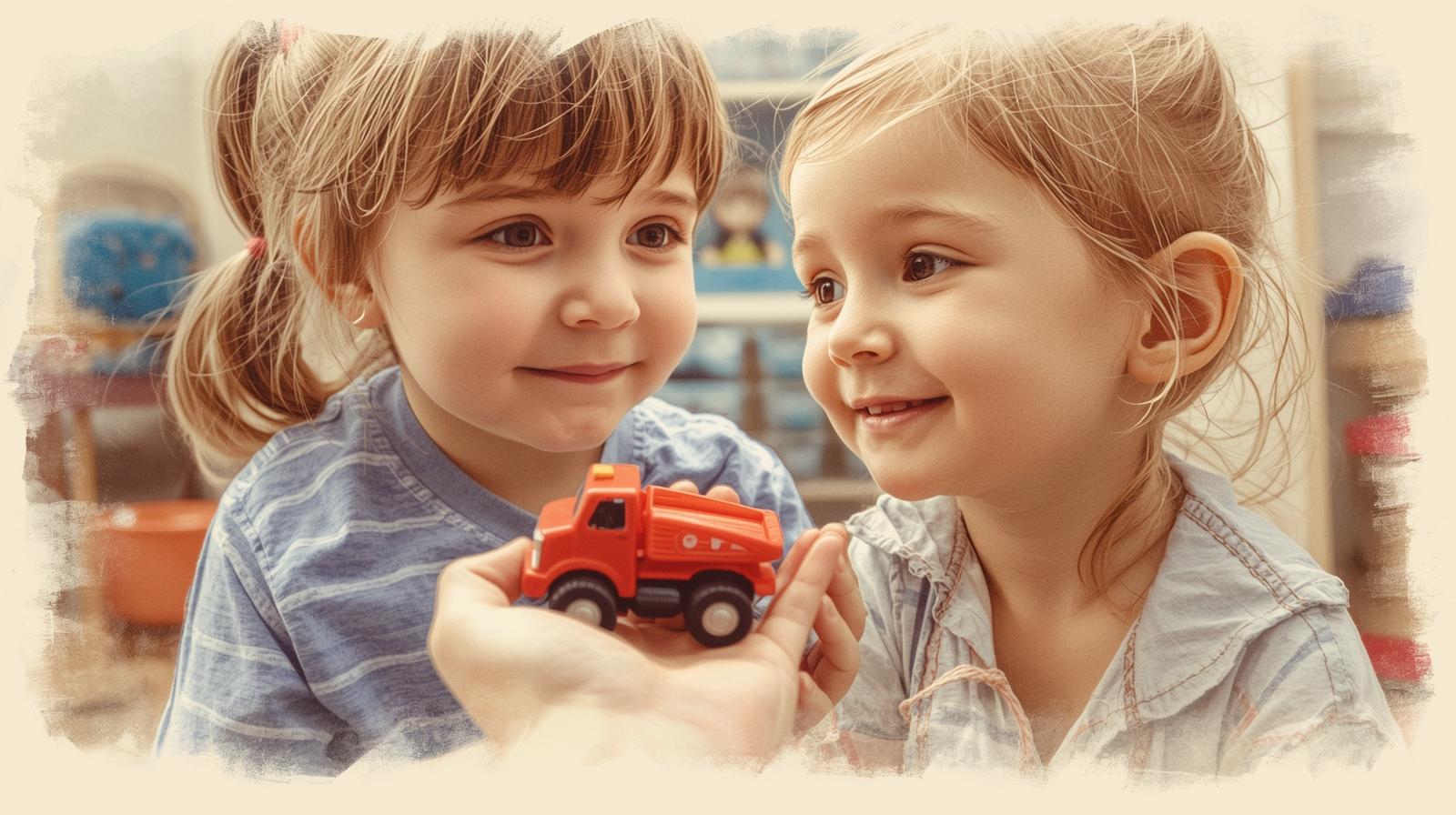
Strong social skills are built on a foundation of good communication. For a preschooler, this means learning to listen to others, express their own ideas clearly, and take turns in a conversation. These playful social skills activities are designed to build a confident and effective communicator.
6. Puppet Conversations
Description: Using puppets to model and practice conversational skills in a low-pressure way.
Materials Needed: Two puppets (or even two decorated socks).
How to Do It: Use the puppets to act out simple social scenarios. Have one puppet ask the other, “Can I play with you?” or “I really like your drawing.” Then, give your child one of the puppets and have a conversation with them, puppet-to-puppet. Many children who are shy to speak for themselves will happily chat away through a puppet.
Learning Objective: Teaches conversational turn-taking, how to ask questions, and how to join in play.
7. The “This or That” Question Game
Description: A fun, fast-paced game that makes conversation easy and silly.
Materials Needed: None!
How to Do It: The goal is to ask silly questions that require a choice and a “why.” “Would you rather have a pet dragon or a pet unicorn? Why?” “Would you rather eat broccoli ice cream or spaghetti with jelly? Why?” This gets children talking and explaining their reasoning.
Expert Tip: This is a perfect activity for car rides or waiting in line. For a giant list of hilarious prompts, check out our list of ‘This or That’ questions for kids.
Learning Objective: Develops expressive language, opinion-sharing, and listening skills.
8. Storytelling Circle
Description: A group activity where everyone collaborates to build a single, silly story.
Materials Needed: None!
How to Do It: Sit in a circle. One person starts the story with a single sentence, like “Once upon a time, there was a purple elephant who loved to…” The next person in the circle adds the next sentence, and so on. The story will get sillier and more imaginative with each person’s turn.
Learning Objective: Teaches listening skills, narrative sequencing, and creative collaboration.
9. Show and Tell (at Home)
Description: A classic classroom activity adapted for home to build public speaking confidence.
Materials Needed: One of your child’s favorite toys or objects.
How to Do It: Once a week, have a family ‘Show and Tell’. Let your child choose one special item and “present” it to the family. Ask them simple questions to guide them: “What is it? Why do you love it? What is your favorite thing to do with it?”
Learning Objective: Fosters public speaking skills, descriptive language, and the ability to answer questions.
10. The ‘Feelings’ Reporter
Description: An activity to practice communicating emotions, not just facts.
Materials Needed: A book or a TV show.
How to Do It: While reading a story or watching a show, pause after a key scene and ask your child to be the ‘Feelings Reporter’. “How do you think that character is feeling right now? How can you tell?” This teaches them to look for non-verbal cues (like a frown or a smile) and to connect actions to emotions.
Learning Objective: Builds emotional vocabulary and the ability to read non-verbal cues.
Category 3: Empathy – Understanding a Friend’s Heart
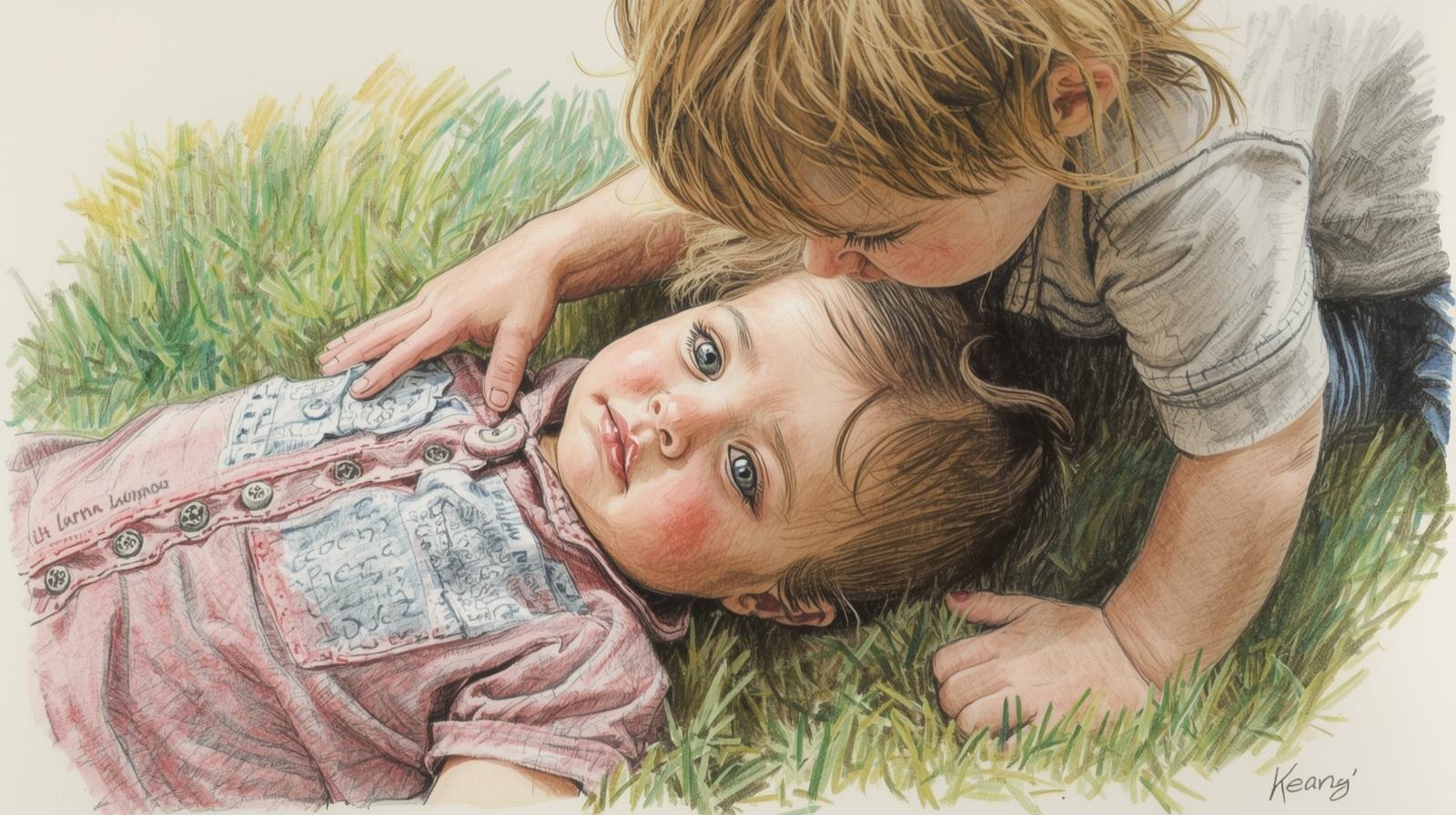
Empathy—the ability to understand and share the feelings of another—is one of the most important social skills a child can learn. It’s the foundation of kindness, compassion, and strong friendships. These social skills activities are designed to help your preschooler start to see the world from someone else’s perspective.
11. Emotion Charades
Description: A fun, active game of guessing feelings instead of objects or actions.
Materials Needed: Small pieces of paper with simple emotion faces drawn on them (happy, sad, angry, surprised).
How to Do It: Put the emotion faces in a hat. Have one person pick a face without showing it to others and act out that emotion using only their face and body. The other players have to guess what the feeling is. It’s a hilarious way to build emotional vocabulary.
Learning Objective: Teaches how to recognize emotions from non-verbal cues (body language and facial expressions).
12. “What Would You Do?” Scenarios
Description: Talking through simple social problems in a calm, hypothetical way.
Materials Needed: None!
How to Do It: During a quiet moment, like in the car or at dinner, pose a simple social scenario. “What would you do if you saw a friend fall down on the playground?” or “What could you say if a friend took your crayon without asking?” Talk about different possible solutions together.
Learning Objective: Develops problem-solving skills, perspective-taking, and empathy.
13. Storybook Feelings Detective
Description: Using story time to become an expert on character emotions.
Materials Needed: Any picture book with clear character illustrations.
How to Do It: As you read, pause and point to the characters’ faces. Ask, “How do you think the wolf is feeling right now? Look at his eyebrows. What is his mouth doing?” This teaches children to connect facial expressions to feelings and context.
Learning Objective: Enhances emotional literacy and the ability to infer feelings from context.
14. “Ouchie” Role-Play with Stuffed Animals
Description: A gentle way to practice caring and comforting behaviors.
Materials Needed: Stuffed animals and a toy doctor’s kit or bandages.
How to Do It: Pretend that one of the stuffed animals has a problem. “Oh no, Teddy Bear fell and bumped his head! He looks so sad. What can we do to make him feel better?” Guide your child to offer comfort, like giving a hug, a gentle pat, or putting a bandage on the “ouchie.”
Learning Objective: Practices empathetic responses and comforting actions in a safe, playful context.
15. The Kindness Jar
Description: A visual and rewarding system for tracking acts of kindness.
Materials Needed: A clear jar and a bowl of pom-poms or marbles.
How to Do It: Place the empty jar in a visible spot. Every time you “catch” your child doing something kind—like sharing a toy, giving a compliment, or helping a sibling—have them place a pom-pom in the jar. When the jar is full, celebrate with a special family treat. This makes kindness a visible and celebrated value.
Expert Tip: This works because it helps children manage their own impulses in favor of a positive social outcome, a key part of developing their emotional regulation skills.
Learning Objective: Reinforces pro-social behavior and makes kindness a tangible concept.
Category 4: Cooperation – Learning That ‘We’ is More Fun Than ‘Me’
Cooperation is the next level up from sharing and turn-taking. It’s the ability to work with others toward a common goal. This is a complex skill for preschoolers, who are naturally egocentric. These social skills activities are designed to make teamwork a fun and rewarding experience.
16. The Giant Blanket Fort
Description: A classic childhood activity that requires teamwork to succeed.
Materials Needed: Blankets, sheets, pillows, and furniture (like chairs or a couch).
How to Do It: Announce the mission: “Let’s build the biggest, coziest fort ever!” This task is almost impossible for one small child to do alone. They will naturally need to work together, hold up blankets for each other, and negotiate where the pillows should go.
Learning Objective: Teaches teamwork, collaborative problem-solving, and shared goal achievement.
17. A Giant Puzzle on the Floor
Description: Working on a single, large puzzle as a team.
Materials Needed: A large floor puzzle with big pieces (24-48 pieces is a good start).
How to Do It: Dump all the pieces in the middle of the floor. Don’t divide them up. Encourage the children to work together. “You look for the edge pieces, and I’ll look for all the blue pieces!” They will naturally start helping each other and pointing out pieces that fit.
Learning Objective: Fosters cooperative problem-solving and communication.
18. The “Keep the Balloon Up” Game
Description: A simple, high-energy game where the only goal is to not let a balloon touch the floor.
Materials Needed: One or two inflated balloons.
How to Do It: The rule is simple: everyone must work together to keep the balloon in the air. This is a non-competitive game where everyone is on the same team. It naturally encourages communication and spatial awareness.
Learning Objective: Teaches teamwork and shared goals in a fast-paced, fun environment.
19. Washing the Toys
Description: Turning a chore into a fun, cooperative water-play activity.
Materials Needed: A large bin of soapy water, another bin of clean water for rinsing, sponges, and a collection of washable plastic toys.
How to Do It: Set up an assembly line. One child can be the ‘Scrubber’ (washing the toys in the soapy water), another can be the ‘Rinser’ (dipping them in the clean water), and a third can be the ‘Dryer’ (placing them on a towel).
Learning Objective: Teaches role-playing, cooperation, and completing a multi-step task as a team.
20. Group Story Mural
Description: Creating one single, giant piece of art together.
Materials Needed: A very large piece of paper taped to the floor or a wall, and a variety of art supplies.
How to Do It: Instead of giving each child their own piece of paper, provide one huge canvas. Decide on a theme together, like “Under the Sea” or “A Trip to the Jungle.” Let them all work on the same mural at the same time, negotiating space and adding to each other’s drawings.
Learning Objective: Fosters creative collaboration, negotiation, and shared ownership of a project.
Category 5: Good Sportsmanship & Problem-Solving
As preschoolers start to engage in more structured games, a new set of social challenges emerges. Learning how to win with grace, lose without a meltdown, and solve small problems independently are the final, crucial pieces of the social skills puzzle. These activities are designed to build resilience and character.
21. “Silly “Olympics
Description: A series of non-competitive, silly races where the goal is laughter, not winning.
Materials Needed: Open space. Optional: pillowcases for sack races.
How to Do It: Instead of a simple running race, make the challenges absurd. “Who can get to the tree the fastest by hopping like a frog?” “Let’s have a race to see who can walk backward the slowest!” By making the process silly, you remove the pressure of winning and focus on the fun of participation.
Learning Objective: Teaches that participation is more important than winning and builds resilience.
22. Red Light, Green Light
Description: The classic game of impulse control.
Materials Needed: None!
How to Do It: One person is the ‘stoplight’. When their back is turned, they say “Green light!” and the other players can run towards them. When they turn around and yell “Red light!”, the players must freeze. Anyone caught moving has to go back to the start. It’s a fun way to practice following rules and managing impulses.
Learning Objective: Develops self-control, listening skills, and rule-following.
23. “Fix the Problem” Role-Play
Description: Acting out common preschool problems to practice solutions.
Materials Needed: Two dolls or stuffed animals.
How to Do It: Use the dolls to act out a simple conflict. “Oh no, Bunny snatched the block from Teddy! Teddy looks so sad. What could Teddy say or do?” Guide your child to brainstorm solutions like “He could ask for it back” or “He could find another toy.”
Learning Objective: Teaches conflict resolution skills and problem-solving in a safe context.
24. The “Mistake” Game
Description: An activity that intentionally models making mistakes and recovering from them.
Materials Needed: Building blocks or a simple drawing activity.
How to Do It: While building a tower with your child, intentionally make it fall over. Say cheerfully, “Oops! My tower fell down. That’s okay, I can try again!” When drawing, make a “mistake” and say, “Oops, I made the line too long. No problem, I’ll just turn it into a long, slithery snake!”
Learning Objective: Normalizes making mistakes and models a positive, resilient response to failure.
25. The “Goal of the Game” Chat
Description: A pre-game chat to redefine what ‘winning’ means.
Materials Needed: Any simple game.
How to Do It: Before you start a game, set a different kind of goal. Say, “For this game, our number one goal isn’t to win. Our goal is to have fun and to be a good sport to the other player.” This shifts the focus from the outcome to the process.
Expert Tip: This is a wonderful, simple way of teaching them the basics of setting a goal that isn’t just about being first or best.
Learning Objective: Teaches good sportsmanship and introduces the concept of setting process-oriented goals.
F.A.Q. About Emotional Regulation
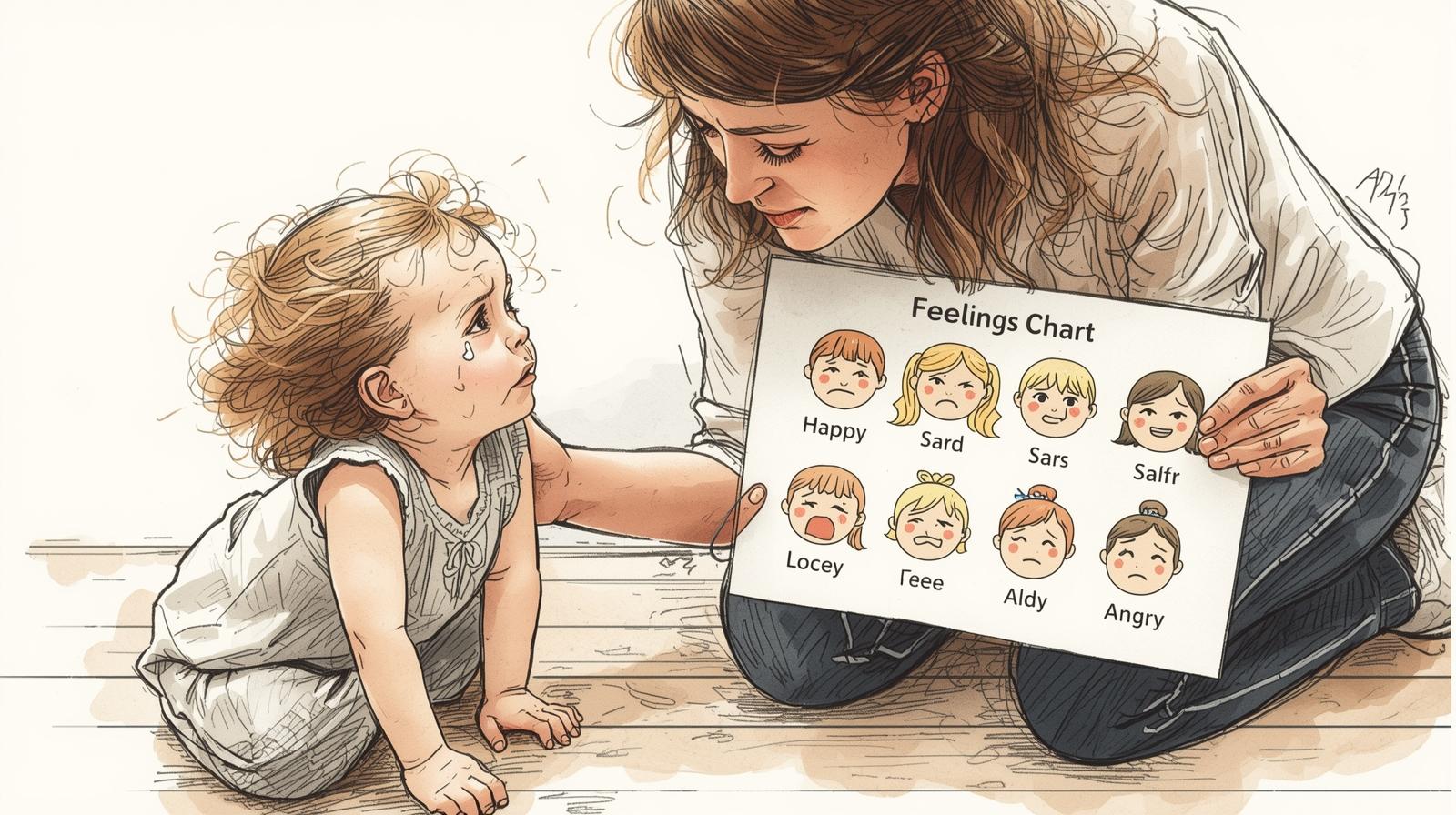
Teaching emotional regulation is a journey, not a destination. It’s natural for parents to have a lot of specific questions. Here are our expert answers to the most common queries.
What does 'emotional regulation' actually mean for a preschooler?
For a preschooler, it does not mean they stop having big feelings. It simply means they are beginning to develop the ability to manage what they do with those big feelings. Instead of an automatic physical reaction (like hitting when angry), they can start to use a strategy, even a simple one like stomping their feet or asking for a hug. It is the very beginning of the journey from reacting to responding.
At what age do kids start to regulate their emotions?
True, consistent self-regulation is a skill that develops throughout childhood and even into adulthood! However, the foundational building blocks are laid in the preschool years. Around age 3 and 4, children begin to move from being completely overwhelmed by their emotions to having moments where, with a parent's help, they can be coached through a feeling without a full-blown tantrum. Don't expect mastery, but look for small signs of progress.
What are the best strategies to teach a 3 or 4-year-old to regulate emotions?
The best strategies are physical and visual, not verbal. In the middle of a big feeling, a child's 'thinking brain' is offline. Instead of talking, try: 1. 'Belly Breathing': Put a hand on their belly and ask them to 'blow out the birthday candles'. 2. 'Stomping Mad': Give them a safe space to stomp their feet to get the angry energy out. 3. The 'Calm-Down Corner': As we mentioned, a cozy, safe space with comforting items can be a lifesaver. The key is to co-regulate with them first, before they can self-regulate.
What causes poor emotional regulation in some children?
In most young children, 'poor' emotional regulation is simply a normal part of development—their brains are still building the pathways for self-control. Other factors can include temperament (some kids are naturally more intense), being overtired or hungry, or significant changes in their routine. It is very rarely a sign that there is something 'wrong' with the child.
Are there 'steps' to emotional regulation I can teach?
Yes, though we simplify them for kids. The basic steps are: 1. Notice the Feeling: Use a feelings chart to help them identify what they are feeling ('You look angry'). 2. Name the Feeling: Give it a label. 3. Choose a Calming Strategy: 'When you feel angry, what is a safe thing you can do? Should we squeeze a pillow or take a big breath?' By practicing this when they are calm, you give them a plan for when they are upset.
What emotional development should a 4-year-old have?
A typical 4-year-old is becoming much more aware of the feelings of others and is starting to show empathy (e.g., comforting a friend who is sad). They can often label their own basic emotions like happy, sad, and mad. They will still have frequent meltdowns, but the recovery time from those tantrums may start to become shorter than when they were younger.