

You’re at the park, watching your child. They are happily digging in the sand. Another child comes over and starts digging right next to them. They are inches apart, using similar toys, but they play in their own separate, silent worlds.
A question pops into your mind, a mix of curiosity and a twinge of worry: “Why aren’t they playing with each other? Is this normal?”
As a team of early childhood experts, we can tell you the answer is not just “yes, it’s normal”—it’s “yes, and it’s fantastic.” You are witnessing one of the most important and foundational stages of social development: parallel play.
This is the typical and primary way that children in the toddler and early preschool years (roughly ages 2 to 4) learn to be comfortable and confident around their peers.
This guide is designed to be your complete resource for understanding this crucial social milestone. We will explain in simple terms what parallel play is, why it is so essential for healthy development, where it fits in the stages of play, and how you, as a parent, can support and nurture it without pushing your child before they’re ready.
What is Parallel Play? A Simple Definition for Parents

In the simplest terms, parallel play is when children play alongside each other, but not with each other. They are aware of the children around them and are often engaged in similar activities with similar toys, but there is no direct interaction, cooperation, or shared goal.
Think of it like two adults working quietly on their laptops at the same coffee shop. They are in a shared space, aware of each other, and doing a similar activity, but they are each focused on their own independent work.
For a toddler, this is a huge developmental step. It’s the bridge between playing alone (solitary play) and eventually playing together (cooperative play).
Key Characteristics of Parallel Play (What to Look For)
You’ll know your child is in the parallel play stage when you see these behaviors:
- They play independently, even when surrounded by other children.
- They show interest in what other children are doing, often observing them from the side.
- They might mimic the actions of a nearby child—if one child starts stacking blocks, another might start stacking their own blocks.
- There is little to no conversation or sharing of toys between the children. Each child is absorbed in their own world, but comfortable in the company of others.
The Hidden Superpowers: Why Parallel Play is So Important
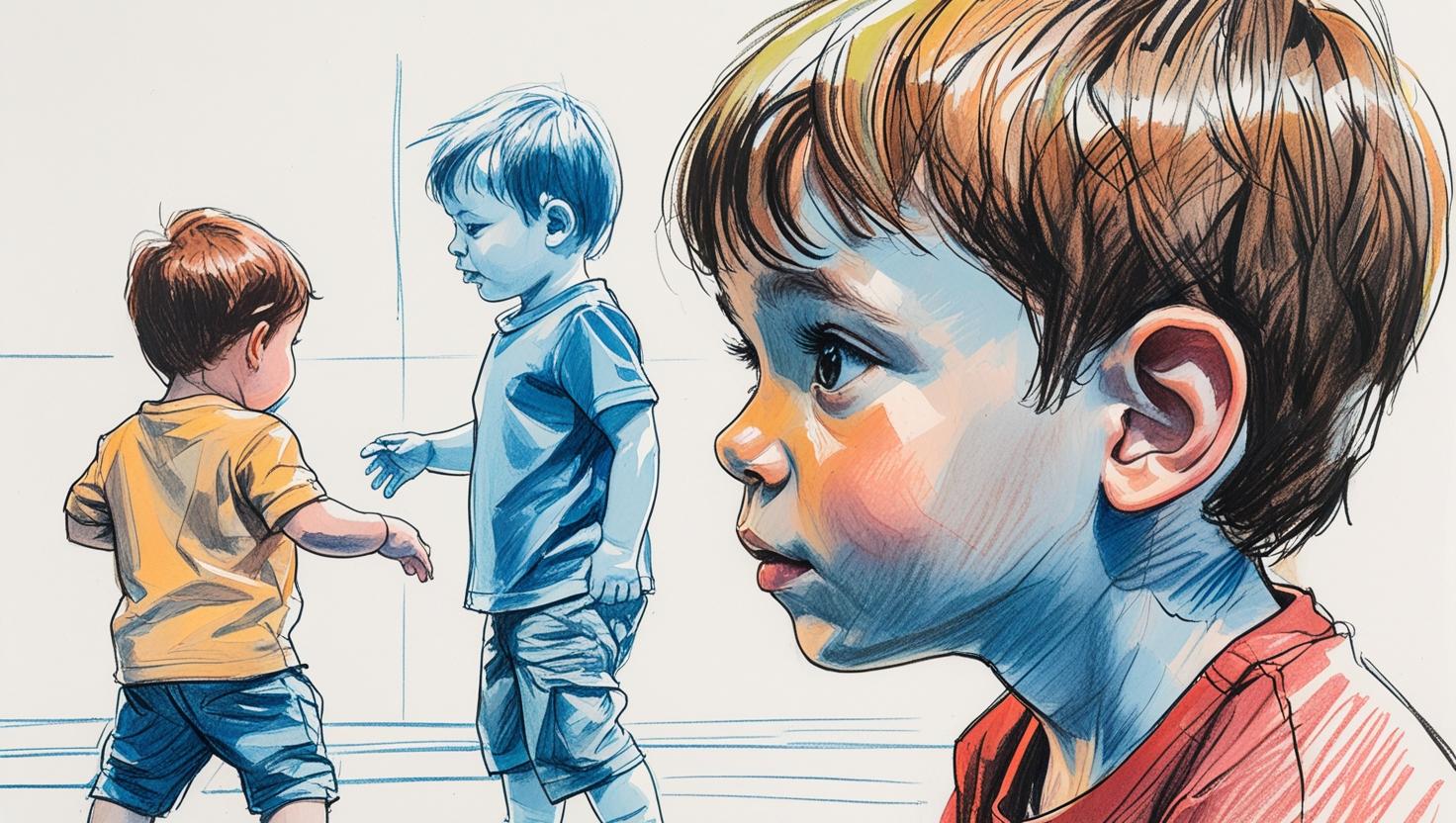
While it might look like nothing is happening socially, parallel play is one of the most productive stages for a young child’s development. It’s a low-pressure ‘social laboratory’ where they build crucial skills for future friendships and classroom success without the anxiety of direct interaction. As experts, we see three hidden superpowers at work during this phase.
Superpower 1: It’s a Safe School for Social Cues
During parallel play, your child is like an anthropologist, constantly observing. They are watching how other children behave, what they do with toys, and how they react to things. They are learning the unspoken rules of social engagement—like personal space and turn-taking—from a safe distance. This observation is the essential homework they must do before they are ready for the ‘group project’ of cooperative play.
Superpower 2: It Builds Language and Vocabulary
Even though they aren’t talking to each other, they are listening to everything. They hear other children say new words (” bulldozer!”), they hear parents and caregivers narrating play (“You’re making a tall tower!”), and they absorb this new vocabulary like a sponge. This rich language exposure is a critical, and often invisible, benefit of playing alongside peers.
Superpower 3: It Develops a Sense of Self
Parallel play is where a toddler begins to define their own interests and preferences in a social context. By playing with their own toys while others are present, they are practicing independence and developing their own ideas. It’s a crucial step in learning to be an individual within a group, a skill that is absolutely essential for navigating a preschool or kindergarten classroom.
The Bigger Picture: From Solitary to Social Butterfly
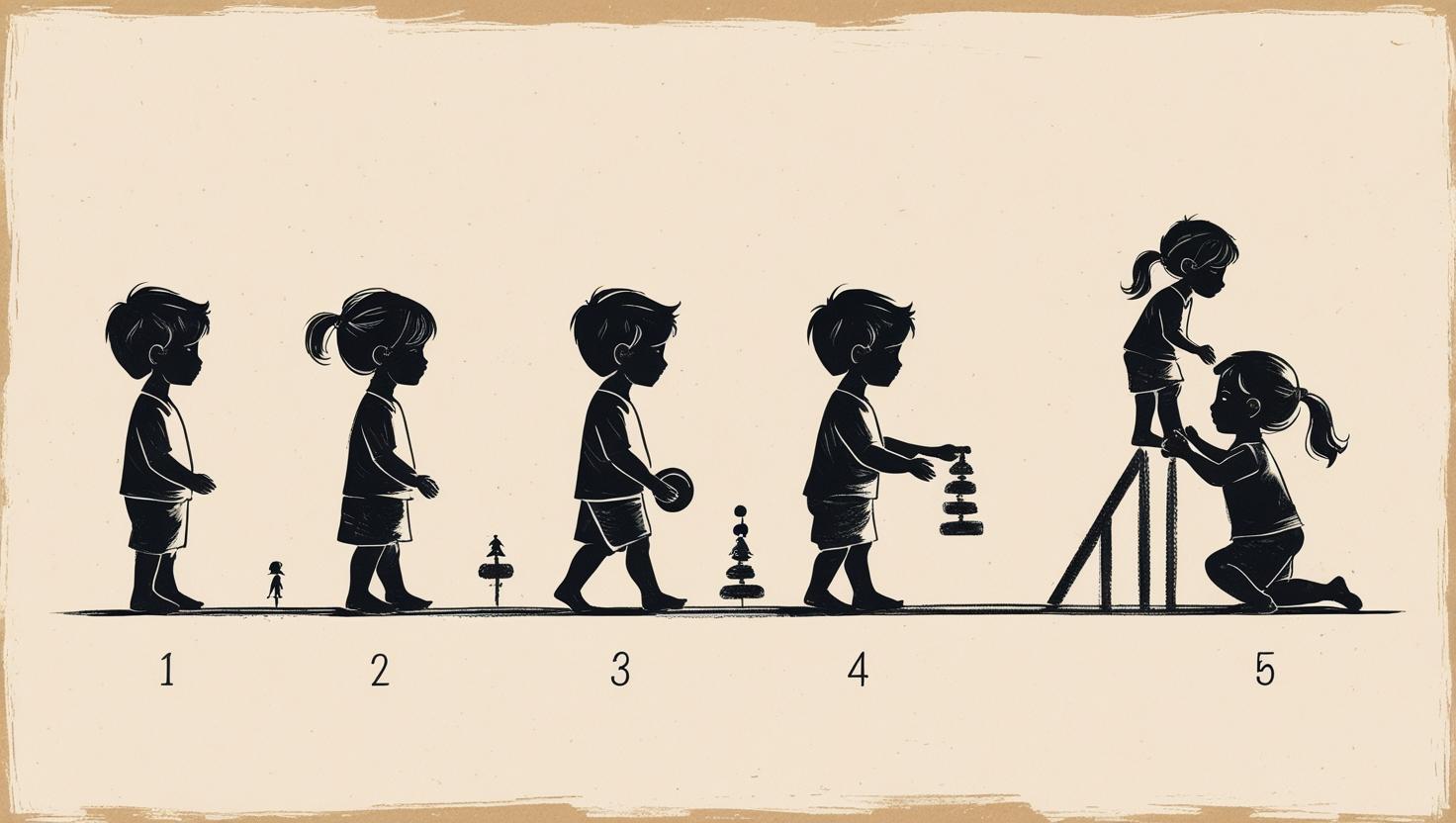
To fully appreciate the importance of parallel play, it helps to see it as one crucial stop on a longer journey. In the 1930s, sociologist Mildred Parten first identified the predictable sequence children move through as they learn to play with others. Understanding this progression can give you a clear map of your child’s social development and reassure you that they are right on track.
As experts, we use this framework to understand a child’s social world. Here are the stages, simplified for parents:
- Solitary Play (Playing Alone): Infants and young toddlers are happily absorbed in their own world.
- Onlooker Play (Watching): The child watches other children play with intense interest, but doesn’t join in.
- Parallel Play (Playing Alongside): This is the critical bridge. The child plays next to others, using similar toys, but without direct interaction.
- Associative Play (Playing Together, Loosely): Children start to interact, sharing materials and talking, but they don’t yet have a shared goal. (e.g., several kids in the block area, each building their own thing, but talking and handing blocks to each other).
- Cooperative Play (Playing Together with a Goal): This is the final stage. Children work together towards a common goal, with assigned roles and rules (e.g., playing “house,” building one giant tower together, or playing a board game).
Seeing parallel play as the essential third step in this sequence helps you understand its true purpose. It’s the ‘practice round’ for the more complex social world to come, and it fits perfectly within the predictable stages of play and overall child development.
A Parent’s Toolkit: How to Nurture Healthy Parallel Play
While parallel play is a natural stage, you can create an environment that makes it a positive and productive experience for your toddler or preschooler. The goal is not to rush them into cooperative play, but to make the parallel play stage as rich as possible. Here are some expert tips.
1. Create an ‘Invitation to Play’
Instead of just placing toys out, set up an ‘invitation’. Arrange an activity on a small rug or table with enough materials for two children. This naturally encourages them to play alongside each other. A great option is to set out materials for simple preschool crafts, where each child can work on their own creation in a shared space.
2. Don’t Force Sharing (Yet!)
This is the most important—and often most difficult—piece of advice. For a two or three-year-old, the concept of ‘mine’ is a huge part of their developing identity. Forcing them to share a beloved toy can feel like a personal attack. During parallel play, it’s better to have multiple similar toys available. Instead of forcing sharing, you are teaching them how to manage their big feelings in a social setting, a key part of developing their emotional regulation skills.
3. Be a ‘Sportscaster’, Not a Director
Resist the urge to direct their play (“Why don’t you build a tower together?”). Instead, act like a sportscaster and simply narrate what you see in a neutral, objective way. “I see Liam is making a long, blue train. And I see Chloe is stacking the red blocks.” This makes both children feel seen without adding any pressure to interact.
4. Celebrate Their Unique Identity
Parallel play is a celebration of individuality within a group. It’s a fantastic time to reinforce your child’s sense of self. Engaging in fun ‘All About Me’ activities at home helps them build the confidence they need to feel secure while playing alongside their peers. When they know who they are, they are less intimidated by others.
10 F.A.Q. About Parallel Play
It’s a fascinating and often misunderstood stage of development. Here are our expert answers to the most common questions parents have.
What is a simple example of parallel play?
A perfect example is two toddlers in a sandbox. One is focused on filling a bucket, and the other is focused on digging with a shovel. They are playing happily side-by-side, aware of each other, but they are not working together on the same sandcastle. That is the essence of parallel play.
What age is normal for parallel play?
Parallel play is the dominant form of social play for toddlers and young preschoolers. It typically emerges around 18-24 months and is very common through age 3 and even into age 4. Seeing your 3-year-old still engaging in parallel play is not just normal; it is healthy and developmentally appropriate.
Is parallel play healthy?
Yes, it is incredibly healthy! It is a crucial and necessary stage of social development. It acts as a 'safe practice' for social interaction, allowing children to learn the unspoken rules of being in a group (like personal space) without the pressure of direct communication and cooperation. It builds the foundation for all future, more complex social play.
Why do autistic children often enjoy parallel play?
This is a great observation. While parallel play is a stage for all children, it can be a particularly comfortable and preferred form of social engagement for many autistic individuals, even into adulthood. It allows for social connection and the feeling of being with others without the potential sensory and social overload of direct, cooperative interaction. It provides a perfect balance of togetherness and personal space.
Is there such a thing as 'parallel play' for adults?
Yes, absolutely! Adults do it all the time. Think of going to a coffee shop to work on your laptop alongside other people. Or attending a yoga class, or going to a library to read. You are engaging in an activity in the company of others, which provides a sense of community, but you are focused on your own task. It is a very normal and healthy form of social connection for all ages.
When do kids start playing TOGETHER?
The transition from parallel play to more interactive play (called associative and cooperative play) typically begins between the ages of 3 and 4. You'll start to see 'associative play' first, where children might share materials (like all using the same big bucket of LEGOs) but still work on their own projects. True cooperative play, with a shared goal, becomes more common after age 4.
Conclusion: Enjoy the Quiet Company
As we’ve seen, parallel play is not a sign of social delay—it is a quiet, powerful, and absolutely essential stage of healthy development. When you see your child playing happily alongside a peer without interacting, you are not witnessing a missed connection. You are witnessing a child who is learning to be comfortable with themselves in a social space, observing the world, and building the foundational confidence they will need for the more complex friendships to come.
Your role as a parent is not to push them into the next stage, but to provide a safe and supportive environment for the one they are in. Celebrate their independence, trust their unique timeline, and enjoy this peaceful stage of ‘quiet company’. It is the beautiful and necessary calm before the wonderful, chaotic storm of cooperative play.
To support your child’s crucial independent and focused play, our team has designed the ultimate resource. When they are ready for quiet, engaging activities that build foundational skills, our complete bundle of learning activities is packed with hundreds of worksheets perfect for this stage of self-directed learning.