
You hear it at the playground or during a playdate: “My three-year-old already knows his whole alphabet!” Meanwhile, your child seems more interested in dinosaurs than the letter ‘D’. A familiar wave of parental anxiety washes over you: “Is my child behind?” As a team of early childhood experts, we want to tell you to take a deep breath.
Learning the alphabet is a developmental journey with many steps, not a race to a finish line. Understanding the typical letter recognition milestones by age is the key to replacing worry with confident, joyful support.
A Parent’s Guide to Letter Recognition Milestones (Ages 2-5)
This guide is your clear, stress-free timeline. We will break down what you can realistically expect at each age, from the first signs of interest to confident recognition. This is not a rigid set of rules, but a map of the beautiful, unfolding process of literacy.
If you’re looking for a deep dive into the ‘how’ and ‘why’ of teaching the alphabet, we recommend reading our complete guide on how to teach letter recognition. Here, we will focus on the ‘when’.
Ages 2-3: The ‘Explorer’ Stage — It’s All About Exposure
At this early stage, the goal is zero pressure and 100% joyful exposure. A two or three-year-old is not expected to ‘know’ their letters in an academic sense. Instead, you are planting the seeds of literacy by making the alphabet a fun and familiar part of their world.
What to Look For (The Checklist for this Stage):
- Shows interest in looking at picture books with you.
- Enjoys singing the ‘ABC Song’ (even if they muddle the middle part!).
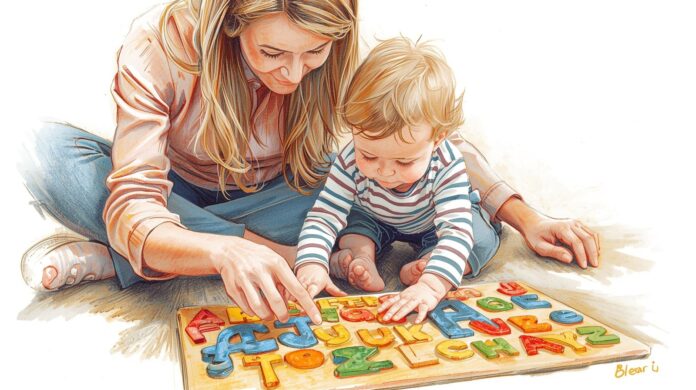
- Can play with alphabet puzzles as shapes, not necessarily knowing the letter names.
- May point to a letter they recognize from their own name, like the ‘M’ in the McDonald’s sign if their name is ‘Max’.
Your Role: Be a Play Partner, Not a Teacher. Your job here is simply to make letters a positive presence. Point them out casually on street signs, read alphabet books with silly voices, and sing the ABC song while you wash hands. That’s it. You are building a foundation of fun.
Ages 3-4: The ‘Name Detective’ Stage
This is a magical and pivotal stage. Around age 3 or 4, most children stop seeing the alphabet as 26 random shapes and start to understand that certain letters have a very special meaning: they belong to them.
The letters in their own name become the gateway to the entire world of literacy. They become “Name Detectives,” excitedly pointing out the letters of their name on signs, in books, and on cereal boxes.
What to Look For (The Checklist for this Stage):
- Can recognize and point out the first letter of their name with excitement.
- Shows a strong preference for the letters in their name over all other letters.
- Begins to notice their name’s letters in other words (“Hey, ‘Mom’ starts with my letter!”).
- May begin to attempt to ‘write’ their name, which often looks like scribbles that vaguely resemble the correct letter shapes.
Your Role: Fuel Their Passion. This is the moment to lean in. All of your ‘letter learning’ can now be anchored to their name. Instead of drilling random letters, focus on the ones that matter most to them.
This is the perfect time to give them fun, low-pressure ways to practice writing the most important letters they know—the ones in their own name. By celebrating their personal connection to these letters, you are making the entire alphabet feel relevant and exciting.
Ages 4-5: The ‘Alphabet Apprentice’ Stage
In the year before kindergarten, a child’s letter knowledge typically explodes from just recognizing a few special letters to understanding the alphabet as a complete system. They are now ‘Alphabet Apprentices’, ready to learn the tools of the trade. Their brain is mature enough to start connecting letter shapes to letter names and even letter sounds on a more consistent basis.
What to Look For (The Checklist for this Stage):
- Can recognize most, if not all, uppercase letters.
- Can recognize many common lowercase letters (especially those in their name).
- Understands that letters have names and are different from numbers.
- Begins to understand that letters make specific sounds (e.g., “B says /b/”).
- Shows interest in ‘writing’ by scribbling and making letter-like shapes.
Your Role: Be a Playful Guide. Your job now is to expand their world beyond their name. Introduce one or two new letters a week in a fun, thematic way. Focus on the sound the letter makes, not just its name. Play games that involve matching uppercase and lowercase letters. Keep the activities short (5-10 minutes) and always end on a positive, successful note. You are moving from building exposure to building real, foundational literacy skills.
How to Support Each Stage: A Play-Based Approach

Understanding the milestones is the first step. The next is knowing how to gently support your child at each stage without pressure. As experts, we know that the “how” is always more important than the “what.” The best approach is always play-based, meeting your child exactly where they are. Here are some simple, age-appropriate activity ideas for each of the three stages.
Activities for the ‘Explorer’ (Ages 2-3)
At this stage, the goal is 100% sensory and exposure. There are no right or wrong answers.
- Alphabet Bath: Use foam bath letters and let them simply play and stick them on the wall. Casually name the letters as they grab them.
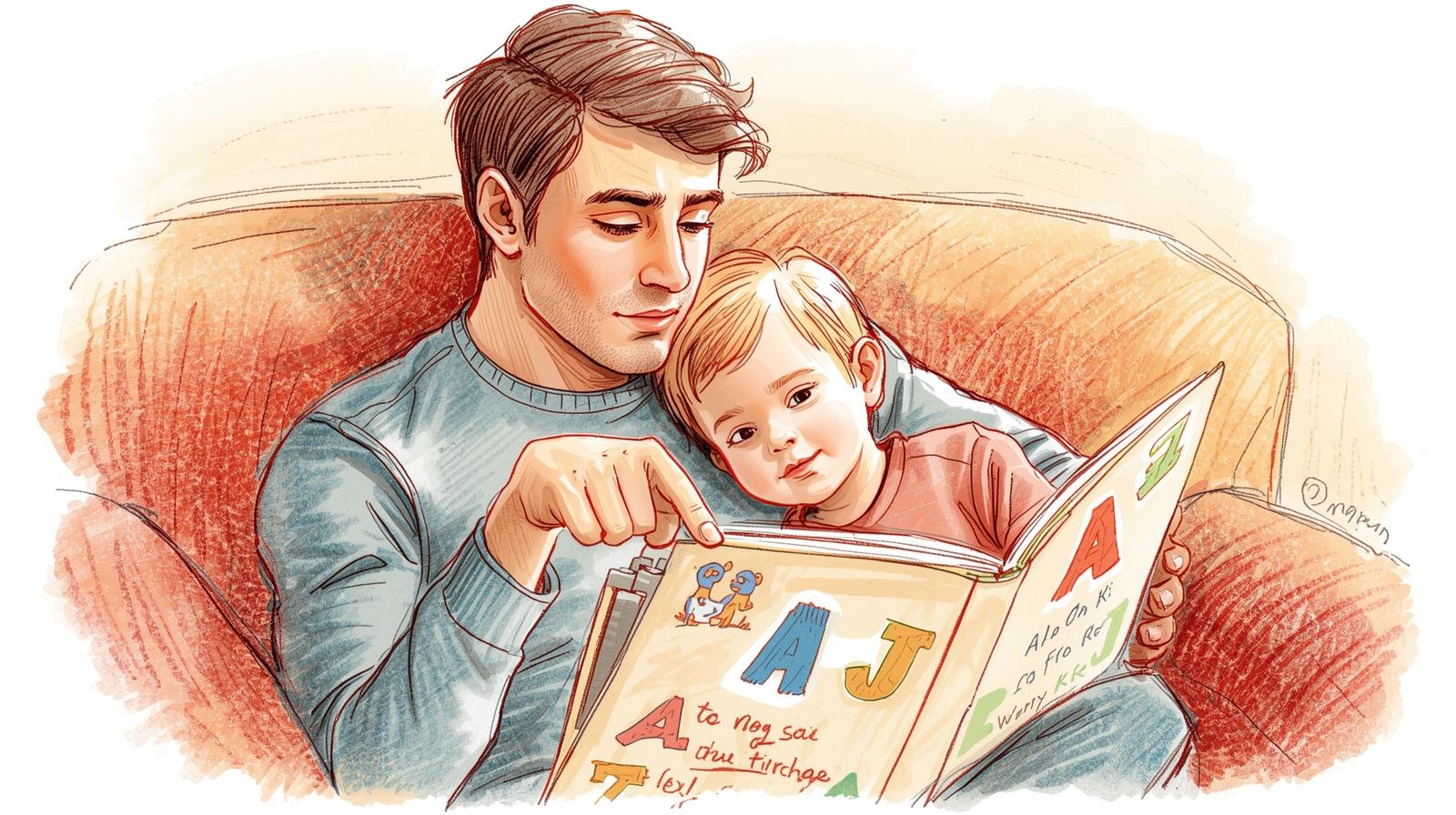
- Reading Point-Outs: While reading a big, colorful alphabet book, simply point to the letters and say their names. Don’t quiz them.
- Alphabet Puzzles: Treat them like any other shape puzzle. Celebrate when they get a piece to fit, and casually mention the letter’s name: “You found the ‘B’ piece!”
Activities for the ‘Name Detective’ (Ages 3-4)
During this stage, all activities should revolve around the magical, high-interest letters of their own name. This makes learning feel personal and incredibly motivating.
- Name Art Collage: Write their name in large bubble letters on a piece of paper. Let them decorate it by gluing on craft materials like pom-poms, glitter, or scraps of colored paper.
- “Fishing” for Letters: Write the letters of their name on paper fish, add a paperclip to each, and use a magnet on a string to “fish” for them. As they catch each letter, they can put it in order to build their name.
- Sensory Name Writing: Forget pencils. Have them trace the letters of their name with their finger in a tray of sand, salt, or shaving cream. This builds muscle memory in a fun, tactile way.
Activities for the ‘Alphabet Apprentice’ (Ages 4-5)
Now that your child is ready to learn the whole alphabet, you can introduce more structured games. The key is to keep it playful and focus on one or two new letters at a time to avoid overwhelming them.
- Letter Matching Games: This is the bread and butter of this stage. You can create simple memory games with letter cards, or games where they have to match an uppercase letter to its lowercase partner.
- “I Spy” with Letter Sounds: The classic “I Spy” game is a phonics powerhouse. Say, “I spy with my little eye, something that starts with the /b/ sound…” This connects the visual letter to its auditory sound.
- Simple Letter Sorting: Give them a small pile of magnetic letters and have them sort them in different ways. “Let’s find all the letters with straight lines,” or “Let’s find all the letters with curves.”
The number of games you can play at this stage is nearly endless. For a huge, comprehensive list of ideas, we’ve created a special resource for you. You can find it here: our ultimate list of 20+ letter recognition games.
When to Pay Closer Attention (And When to Relax)
Understanding these milestones is meant to empower you, not to create a new checklist for anxiety. It’s crucial to remember that all children develop at their own unique pace. A child who spends more time on gross motor skills might develop letter recognition a bit later, and that’s perfectly normal.
However, there are some gentle guidelines to keep in mind. In this final section, we will give you a clear, simple indicator for when it might be a good idea to chat with a professional, and when you can confidently relax and trust the process.
A Simple Rule of Thumb: The End-of-Kindergarten Check-In
While exposure and play are key in the preschool years, kindergarten is the year where letter recognition is formally taught and expected to solidify. As a general rule, if your child is nearing the end of their kindergarten year (around age 6) and is still struggling to recognize the majority of the letters of the alphabet, it is a good time to have a proactive and collaborative conversation with their teacher.
This is not a reason to panic. It is simply a signal to partner with the school to ensure your child is getting the right support. Often, a few targeted, multi-sensory strategies are all that’s needed to help things click into place.
For parents who want to provide that targeted support at home in a fun, structured way, our complete Alphabet Worksheet Bundle is designed for this exact purpose. It’s packed with hundreds of multi-sensory activities that systematically build letter recognition skills for every letter of the alphabet, turning practice into a game.
F.A.Q. Letter Recognition Questions Answered
Navigating the journey of literacy can bring up a lot of specific questions about different ages. Here are our expert answers to the most common queries we hear from parents.
What is a realistic age for a child to recognize letters?
While every child is different, a realistic timeline is this: most children begin to reliably recognize several letters, especially those in their own name, between the ages of 3 and 4. By the end of kindergarten (around age 5-6), the goal is for them to recognize most, if not all, uppercase and lowercase letters.
Should a 3-year-old be able to 'read' letters?
No. A 3-year-old is in the 'Explorer' stage. The goal for them is to be able to recognize a few key letters (like the first letter of their name), not to 'read' them or know all their sounds. The focus at this age should be on joyful exposure through songs and books, not on academic mastery.
Why can't my 4-year-old recognize letters yet?
There are many normal reasons. It could be a lack of interest, or their brain might be more focused on developing other skills, like gross motor or social skills, at the moment. The most common reason is simply a lack of meaningful exposure. The key is to start with the high-interest letters in their own name and to use the play-based games we've described, rather than flashcard drills which can cause them to shut down.
Can an 18-month-old identify letters?
It is not a developmental milestone for an 18-month-old to identify letters. At this age, a toddler's brain is focused on major language acquisition (learning to talk) and gross motor skills (learning to run and climb). While some toddlers with a strong interest in shapes might point to a letter they recognize from a puzzle, it is not an expected skill.
What is considered 'advanced' for a 2-year-old?
At age 2, 'advanced' is less about academics and more about language. An advanced 2-year-old might be speaking in 3-4 word sentences, have a very large vocabulary, or be able to follow 2-step directions. While some may show an early interest in letters, it is not a typical marker of giftedness at this age.
Do autistic toddlers know the alphabet early?
Sometimes, yes. A significant portion of autistic children have a special interest in patterns and systems, a skill known as 'hyperlexia'. This can lead them to learn and recognize letters and numbers at a very early age, sometimes even before they are speaking in full sentences. It is one of many possible characteristics, but not all autistic children will show this skill.