

As the air turns crisp and leaves begin to fall, one iconic orange orb starts appearing on every doorstep: the pumpkin. For parents of preschoolers, pumpkin season is about so much more than just Halloween decorations.
As a team of early childhood experts, we see pumpkins as one of nature’s most perfect learning tools—a versatile, hands-on way to explore science, math, literacy, and art.
But let’s be honest, the thought of carving a pumpkin with a curious 4-year-old can be a little stressful. That’s why we’ve created the ultimate guide to pumpkin activities for preschoolers that go far beyond carving.
This list is packed with over 25 creative, educational, and low-mess ideas that will keep your child happily engaged and learning all season long.
And if you’re looking to extend the spooky season fun, this is the perfect time to explore our complete Halloween Worksheet Printable pack! It’s filled with ghosts, bats, and friendly monsters to keep the themed learning going. Now, let’s dive into the pumpkin patch of ideas!
Category 1: Pumpkin Science – Exploring with All Five Senses
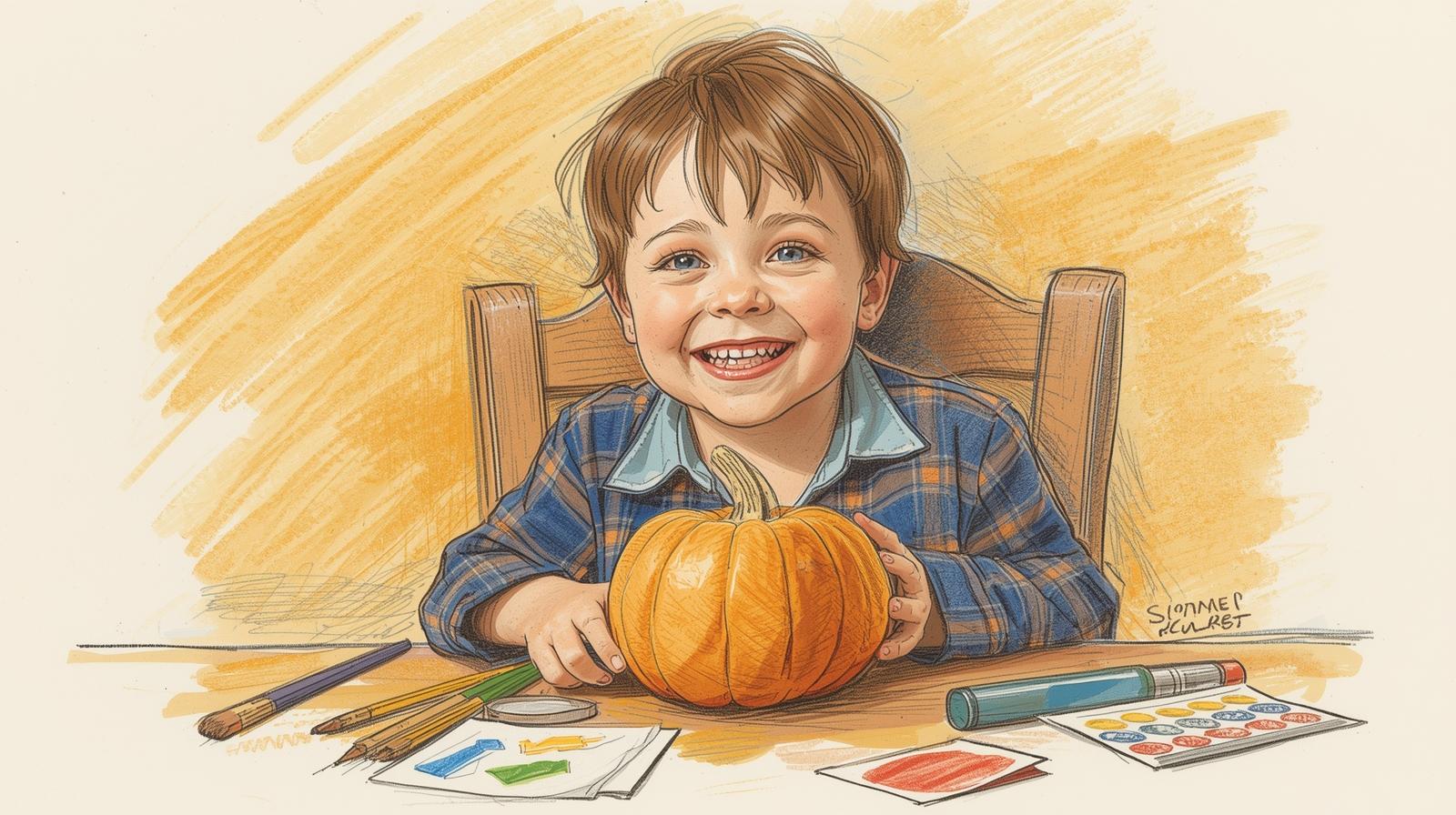
A pumpkin is a fantastic natural laboratory. These sensory and science activities encourage your preschooler to observe, predict, and get a little messy—all in the name of learning. It’s the perfect way to answer the question, “What’s inside a pumpkin?”
1. The Erupting Pumpkin Volcano
Description: The classic baking soda and vinegar experiment, but with a festive, pumpkin-themed twist.
Materials Needed: A small pumpkin, baking soda, vinegar, dish soap, and optional food coloring.
How to Do It:
- Carve the top off the pumpkin and have your child help scoop out the “pumpkin guts” (save the seeds for another activity!).
- Place the hollowed-out pumpkin on a tray to contain the mess.
- Inside the pumpkin, add a good amount of baking soda (a few tablespoons), a squirt of dish soap, and a few drops of food coloring.
- Get ready for the eruption! Let your child pour in the vinegar and watch as a foamy volcano erupts from the top of the pumpkin.
The Simple Science: You’re creating a chemical reaction! The baking soda (a base) reacts with the vinegar (an acid) to release carbon dioxide gas, which creates all the exciting fizz and foam.
2. Does a Pumpkin Sink or Float?
Description: A surprisingly simple experiment about density with a very surprising result.
Materials Needed: A large bucket, tub, or sink filled with water, and a few pumpkins of different sizes (including a small one).
How to Do It:
- Before you start, ask your child to predict: “Do you think this big, heavy pumpkin will sink to the bottom or float on the top?” Use your Science Journal to document their guess.
- Gently place the pumpkin in the water. To most kids’ (and adults’!) surprise, it will float!
- Experiment with different sized pumpkins to see that they all float.
The Simple Science: Even though a pumpkin is heavy, it’s mostly hollow inside and filled with air. This makes its overall density less than the density of water, allowing it to float.
3. “Pumpkin Guts” Sensory Bag
Description: A mess-free way for children to explore the slimy, stringy texture of the inside of a pumpkin.
Materials Needed: The seeds and pulp from inside your pumpkin, a large zip-top plastic bag.
How to Do It:
- Place all the pumpkin “guts” inside the zip-top bag and seal it tightly, squeezing out most of the air.
- Tape the sealed bag to a window or a tabletop.
- Let your child squish, press, and move the seeds and pulp around from outside the bag. They can practice making letters or shapes.
Learning Objective: Provides a rich sensory experience without the overwhelming mess, perfect for children who are sensitive to textures.
4. The Pumpkin Life Cycle
Description: A simple biology lesson that explains where pumpkins come from.
Materials Needed: A pumpkin seed, a small pot with soil, or simply a piece of paper and crayons.
How to Do It:
- Show your child a single pumpkin seed. Explain that every giant pumpkin starts from a tiny seed like this one.
- If you have a pot, plant the seed together.
- Draw the simple life cycle on a piece of paper: Seed -> Sprout -> Vine -> Flower -> Green Pumpkin -> Orange Pumpkin. Talk about each stage.
Learning Objective: Teaches basic life science concepts, sequencing, and where our food comes from.
Download free Pumpkin LIFE CYCLE pdf
Category 2: Pumpkin Math – Counting, Measuring, and More!
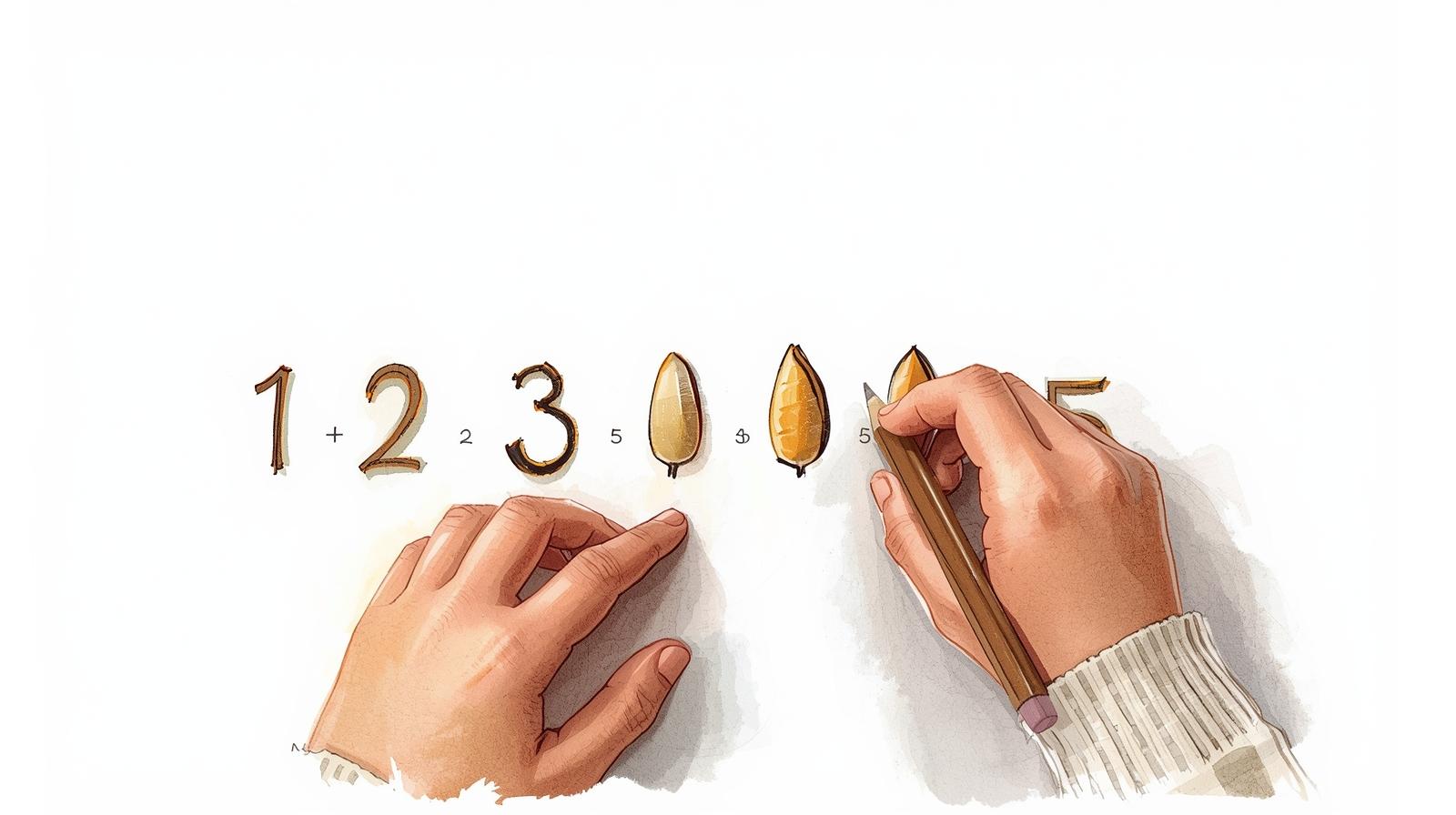
A pumpkin is a fantastic, hands-on tool for exploring all sorts of early math concepts. These pumpkin math activities are a playful way to practice skills that are essential for kindergarten readiness, from counting to geometry.
5. Pumpkin Seed Counting
Description: The classic fall counting activity that every preschooler loves.
Materials Needed: Pumpkin seeds (rinsed and dried), paper, a marker.
How to Do It:
- On a piece of paper, write the numbers 1 through 10.
- Have your child place the correct number of pumpkin seeds next to each written number.
- For older preschoolers, you can draw a simple ten-frame and have them place one seed in each box.
Learning Objective: This is a perfect exercise for one-to-one correspondence. You can extend the learning and practice counting with our fun worksheets as a follow-up.
6. Measure a Pumpkin’s ‘Waist’
Description: An easy and exciting introduction to the concept of measurement.
Materials Needed: A pumpkin and a ball of yarn with scissors, or a soft measuring tape.
How to Do It:
- Ask your child: “How big do you think the pumpkin’s ‘waist’ is?”
- Have them wrap the yarn around the fattest part of the pumpkin and cut the string.
- Lay the string on the floor and compare it to other things. Is it longer than their shoe? Shorter than the rug? This makes the abstract concept of measurement concrete.
Learning Objective: Introduces the concepts of circumference, measurement, and comparing lengths.
7. Pumpkin Geoboard
Description: A unique and fun way to explore shapes and strengthen fine motor muscles.
Materials Needed: A small, squat pumpkin (like a pie pumpkin), push pins, and rubber bands.
How to Do It:
- (Adult step) Firmly press the push pins into the pumpkin, spaced a few inches apart.
- Show your child how they can stretch the rubber bands between the push pins to create different shapes: triangles, squares, and zig-zag lines.
Learning Objective: Develops fine motor strength (a pre-writing skill), shape recognition, and creativity.
8. Sort by Size: The Pumpkin Patch Line-Up
Description: A simple sorting game to teach the concepts of small, medium, and large.
Materials Needed: A few pumpkins or gourds of different sizes.
How to Do It:
- Place all the pumpkins in a mixed-up pile.
- Challenge your child to line them up, from the smallest pumpkin to the biggest pumpkin.
- Use descriptive language: “Can you find the smallest one? Now, which one is the biggest?”
Learning Objective: Teaches the math concepts of size, comparison, and ordering.
Category 3: Pumpkin Literacy – Fun with Letters and Names

A pumpkin’s smooth surface is the perfect, temporary canvas for all sorts of fun literacy practice. These pumpkin activities for preschoolers are a great way to build letter recognition and pre-writing skills without the pressure of a pencil and paper.
9. Alphabet Pumpkin Patch Match
Description: A hands-on matching game to reinforce uppercase and lowercase letter recognition.
Materials Needed: A set of small pumpkins or gourds, a permanent marker.
How to Do It:
- On each pumpkin, write a single uppercase letter.
- On a separate set of bottle caps, leaves, or pieces of paper, write the corresponding lowercase letters.
- Spread the lowercase letters out and have your child “match” them to the correct pumpkin.
Learning Objective: Practices uppercase/lowercase letter matching, a key kindergarten readiness skill.
10. Pumpkin Name Writing
Description: A fun, tactile way to practice the most important word your child will ever learn to write: their own name.
Materials Needed: A medium-sized pumpkin and a washable marker.
How to Do It:
- Write your child’s name in large, clear letters on the pumpkin.
- First, have them trace the letters with their finger. This builds muscle memory.
- Then, give them the washable marker and let them trace over the letters you wrote.
Learning Objective: Provides a fun, low-pressure way to practice writing their name and builds name recognition.
11. “Hammer the Letter” Phonics Game
Description: A high-energy (and noisy!) game for practicing letter sounds.
Materials Needed: A large pumpkin, golf tees, and a child’s toy hammer.
How to Do It:
- (Adult step) Gently push the golf tees into the pumpkin to form a few large, simple letters (like T, L, A).
- Call out a letter sound: “Can you find the /t/ sound?”
- Your child’s job is to find the letter ‘T’ and use the toy hammer to hammer all the tees in flat. They will love this!
Learning Objective: Connects letter shapes to their corresponding sounds and develops hand-eye coordination.
12. Pumpkin Story Stones
Description: Creating simple characters on small pumpkins to encourage storytelling.
Materials Needed: A few very small pumpkins or gourds and permanent markers.
How to Do It:
- On each small pumpkin, draw a simple character face: a happy face, a sad face, a silly face, maybe even a simple cat or dog face.
- Use the “story pumpkins” as prompts for imaginative storytelling. Start a story, “Once upon a time, this happy little pumpkin went for a walk…” and let your child continue it.
Learning Objective: Fosters creativity, narrative skills, and emotional vocabulary.
Category 4: Pumpkin Art – Creative Ideas Beyond Carving
Carving a pumpkin can be tricky and unsafe for little hands. These pumpkin activities for preschoolers are all about decorating and creating, allowing your child to express their artistic side in a safe and fun way. These ideas are perfect for creating beautiful fall decorations for your home.
13. The “Mr. Potato Head” Pumpkin
Description: A classic, no-mess way to give a pumpkin a hilarious personality.
Materials Needed: A pumpkin and a set of Mr. Potato Head plastic parts (eyes, nose, ears, etc.).
How to Do It:
- (Adult step) You may need to use a small tool to start the holes for the plastic parts.
- Let your child choose the parts and push them into the pumpkin to create silly, funny, or happy faces.
Learning Objective: Encourages creativity, develops fine motor skills, and helps teach the parts of the face.
14. Sticker & Dot Sticker Pumpkins
Description: A perfect activity for toddlers and young preschoolers to practice fine motor skills independently.
Materials Needed: A small pumpkin and sheets of stickers or dot stickers.
How to Do It:
- Give your child the pumpkin and the stickers.
- Let them decorate it however they want! Peeling the stickers off the sheet is a fantastic pincer grasp workout.
Learning Objective: Builds fine motor strength, hand-eye coordination, and encourages creative expression.
15. Melted Crayon Pumpkin
Description: A visually stunning art project that creates a beautiful, colorful centerpiece.
Materials Needed: A white pumpkin, a box of crayons (with the paper peeled off), and a hair dryer.
How to Do It:
- (Adult step) Place the crayons in a circle on top of the pumpkin, around the stem, with the tips pointing outward.
- (Adult step) On a low heat and low speed setting, use the hair dryer to gently warm the crayons.
- Let your child watch as the crayons begin to melt and drip down the sides of the pumpkin, creating a beautiful, waxy rainbow.
The Simple Science: This is a simple and beautiful demonstration of phase changes, showing how a solid (the crayon) can turn into a liquid with heat.
16. Pumpkin Stamping
Description: Using a pumpkin as a natural stamp to create fun art prints.
Materials Needed: A very small pie pumpkin or gourd, a knife, washable paint, and paper.
How to Do It:
- (Adult step) Carefully cut the small pumpkin in half from top to bottom.
- Pour some orange paint onto a paper plate.
- Show your child how to dip the flat, cut side of the pumpkin into the paint and then press it onto the paper to make a pumpkin-shaped stamp.
Learning Objective: Explores printmaking, cause and effect, and shape recognition. For more inspiration, check out our guide to more fun preschool crafts.
Category 5: Pumpkin Moves & Munchies
Pumpkins aren’t just for science and art; they can also be part of fun gross motor games and delicious, kid-friendly recipes. These final pumpkin activities for preschoolers engage the whole body and the sense of taste!
17. Pumpkin Patch Roll
Description: A simple and fun gross motor game for toddlers and preschoolers.
Materials Needed: A few small, round pie pumpkins and an open space (like a hallway or backyard).
How to Do It:
- Sit on the floor opposite your child.
- Show them how to roll a pumpkin back and forth between you, like you’re rolling a giant ball.
Learning Objective: Develops gross motor skills, coordination, and turn-taking.
18. Pumpkin Bowling
Description: A silly and exciting twist on classic bowling.
Materials Needed: A small, round pumpkin (to act as the bowling ball) and a set of empty plastic bottles or toilet paper rolls (to act as the pins).
How to Do It:
- Set up your “bowling pins” at the end of a hallway or on a flat patch of grass.
- Let your child get a running start and roll the pumpkin to knock down as many pins as they can.
Learning Objective: Practices hand-eye coordination, gross motor skills, and simple counting (how many pins did you knock down?).
19. Roasted Pumpkin Seeds
Description: A delicious, healthy snack that uses the “guts” from your science experiments.
Materials Needed: Raw pumpkin seeds, olive oil, and a little salt.
How to Do It:
- (Adult & Kid step) After scooping out your pumpkin, have your child help separate the seeds from the stringy pulp. This is a great sensory activity in itself!
- (Adult step) Rinse the seeds well and pat them dry. Toss them with a little olive oil and salt.
- (Adult step) Roast them in the oven at 300°F (150°C) for about 20-30 minutes, or until golden brown.
Learning Objective: Teaches basic cooking skills, where food comes from, and reduces waste.
20. Simple Pumpkin Muffins or Bread
Description: An easy baking project that fills the house with the smell of autumn.
Materials Needed: A simple pumpkin muffin or bread recipe (many can be found online using canned pumpkin puree).
How to Do It:
- Let your child help with the safe and simple parts of the recipe, like pouring the pre-measured ingredients into the bowl and stirring the batter.
- They will feel an immense sense of pride when they get to eat the delicious treat that they “helped” make.
Learning Objective: Introduces basic measurement and chemistry concepts, teaches sequencing, and builds confidence.
Category 6: Quick & Easy Pumpkin Fun (5-Minute Fillers)
Sometimes you just need a quick, simple activity to fill a few minutes before dinner or during a transition. These super-easy pumpkin activities for preschoolers require almost no setup.
21. Pumpkin Washing Station
Description: A simple water play activity that kids adore.
Materials Needed: A small pumpkin, a tub of bubbly water, and a sponge or brush.
How to Do It: Let your child give their pumpkin a “bath.” They will love scrubbing, rinsing, and drying their pumpkin.
Learning Objective: A wonderful sensory experience that also teaches practical life skills.
22. Pumpkin Hide-and-Seek
Description: The classic game of hide-and-seek, but with a pumpkin.
Materials Needed: A small pumpkin.
How to Do It: Take turns hiding the small pumpkin somewhere in a room and having the other person find it. Use positional words: “Is it under the table? Is it behind the chair?”
Learning Objective: Teaches object permanence and positional language.
23. Pumpkin Ring Toss
Description: A simple carnival-style game to practice coordination.
Materials Needed: A pumpkin with a long, sturdy stem, and some rings (glow stick necklaces or rings made from paper plates work well).
How to Do It: Place the pumpkin on the floor and have your child try to toss the rings over the stem.
Learning Objective: Develops hand-eye coordination and gross motor skills.
24. “Five Little Pumpkins” Fingerplay
Description: Acting out the classic Halloween poem with your fingers.
Materials Needed: Just your hands!
How to Do It: Teach your child the simple poem “Five Little Pumpkins Sitting on a Gate.” Use your five fingers as the pumpkins and act out the story. It’s a classic for a reason.
Learning Objective: Builds language skills, rhyming, and number sense.
25. Decorate a Paper Pumpkin
Description: The simplest pumpkin craft of all.
Materials Needed: Orange and green construction paper, scissors, and art supplies (crayons, stickers, glue).
How to Do It: Cut out a large orange circle and a small green stem. Let your child decorate their own 2D pumpkin. They can draw a face, cover it with stickers, or glue on googly eyes.
Learning Objective: A quick, easy, and creative fine motor workout.
F.A.Q. Your Top Pumpkin Questions Answered
Pumpkins are a fantastic learning tool! Here are our expert answers to the most common questions from parents and educators.
In simple words, what can I teach my preschooler about pumpkins?
You can teach four main things: 1. Science: That pumpkins are a fruit that grows on a vine from a seed. 2. Math: You can count the seeds and the lines on the outside. 3. Sensory: What does the inside feel like (slimy, wet) and what does the outside feel like (bumpy, hard)? 4. Art: Pumpkins can be a canvas for all kinds of creativity, not just carving.
What are 5 interesting facts about pumpkins for kids?
Here are five fun facts to share: 1. Pumpkins are a type of fruit, not a vegetable! 2. They are in the same family as cucumbers and squash. 3. Every single part of a pumpkin is edible (even the stem and flowers). 4. The word 'pumpkin' comes from a Greek word that means 'large melon'. 5. The largest pumpkin ever grown weighed more than a small car!
What are the best 'play activities' to do with a pumpkin?
The best play activities are sensory and dramatic. Our top two are: 1. Pumpkin Guts Sensory Play: Just putting all the slimy insides in a big bowl with some spoons and cups provides hours of valuable sensory exploration. 2. Pumpkin 'House': After you've hollowed out a pumpkin, it can become a temporary house for small animal figures or dolls, sparking imaginative play.
What is the 'pumpkin patch game' I hear about?
This is usually a simple matching game. A common version is our 'Alphabet Pumpkin Patch Match' (Activity #9). You write uppercase letters on a set of small pumpkins (the 'patch') and children have to match them with lowercase letters written on leaves or bottle caps. It's a very popular classroom activity.
My child is scared of the pumpkin face. What can I do?
This is very common for preschoolers. Instead of carving a face, focus on 'no-carve' decorating. Let them paint the pumpkin, cover it with stickers, or use the silly Mr. Potato Head parts. This keeps the activity fun and positive, without any scary elements.
How can I use a pumpkin to teach math?
A pumpkin is a math superstar! You can: 1. Count the seeds by ones or in groups of ten. 2. Measure its 'waist' (circumference) with a string. 3. Weigh it on a scale and compare its weight to other objects. 4. Estimate how many seeds are inside before you open it.
What can my child actually learn from exploring the inside of a pumpkin?
They learn a huge amount through their senses! They learn rich vocabulary words to describe what they feel ('slimy', 'stringy', 'squishy', 'wet') and what they smell ('sweet', 'earthy'). They also practice fine motor skills by using their fingers to separate the seeds from the pulp.
What are some different ways pumpkins can be used?
Beyond decorations, pumpkins are amazing! You can: 1. Eat them (roast the seeds, make pumpkin puree for muffins or pies). 2. Use them as a planter (fill a hollowed-out pumpkin with soil and plant a flower). 3. Use them as a bird feeder in your backyard. 4. Use them as a stamp for art projects. 5. Play games like pumpkin bowling.
Conclusion: More Than Just a Season, It’s a World of Learning
As you can see, a single pumpkin holds a nearly endless supply of learning opportunities. It’s a science lab, a math tool, a literacy canvas, and an art project all rolled into one. By embracing these fun, hands-on pumpkin activities for preschoolers, you are doing so much more than just celebrating a season.
You are teaching your child that learning is not confined to a worksheet or a classroom; it is all around us, in the simple, wonderful objects of our world. You are fostering their natural curiosity and showing them that asking questions, exploring with their senses, and creating something with their own hands is a joyful and rewarding experience. That is a lesson that will last far longer than any jack-o’-lantern.